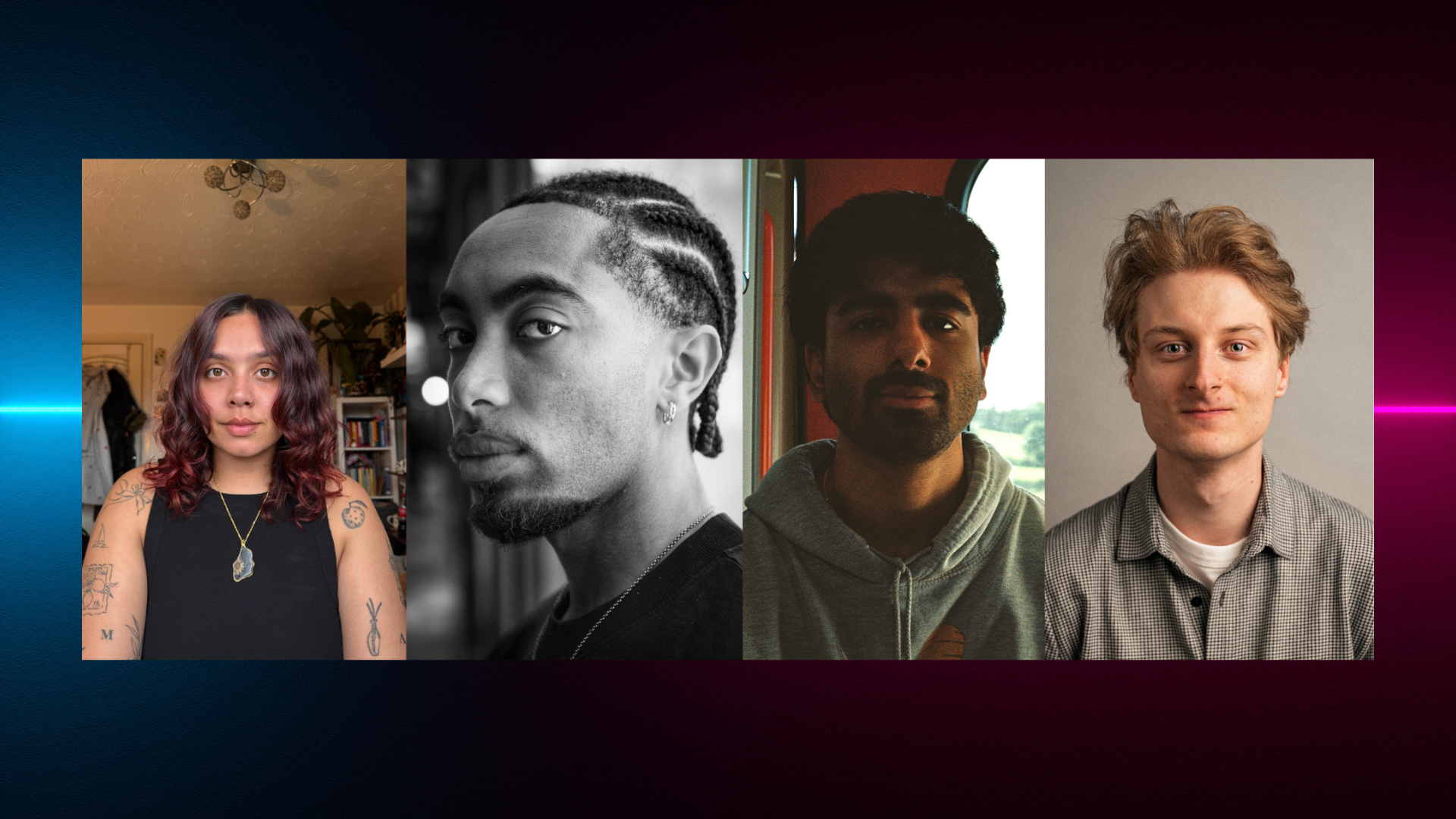
This interview was conducted by Lou Cai and Selena Wang.
“A decaying riverbank in wintry, ice-cold Nanjing. In a neighbourhood of crumbling houses lives a group of wraithlike figures. They do not fit into mainstream society and are each unique in their own particular way: an impoverished poet whose verses can heal; a young man attempting to end his life by leaping into the river; a vagabond searching for a dragon so he can return to the sky; and a traumatised young woman seeking comfort from an old friend who has since become a monk. Meanwhile, a severed fingertip has been eaten by a dog; improvised music drifts from a harmonica and the Chinese string instrument, the erhu; a mobile music wagon stands by the river. Surreal, real and hyperreal at once, a world unfolds like a painting in which documentary images and fiction dissolve into one another – as absurd as it is poetic, alive with humour and brimming with humanity. The inner logic of these characters forms the heart of a radically independent spirit, shaped by resilience and a quiet, stubborn defiance.” – Berlinale

Premiering at Berlinale 2026‘s FORUM, PANDA was the only Chinese film this year at the festival. We have conducted an exclusive interview with director Zhang Xinyang to learn about his debut feature.
What was the inspiration for this film?
Zhang: The timespan for this film was actually quite long. I started writing the script back in 2018. We finished filming in 2022, and now it’s 2026, and we’ve finally made it to the Berlinale. It’s been a long journey of eight years. I worked on this from the age of twenty-three, and now I’m in my early thirties.
The initial idea for this film came in when many of my relatives fell ill and were hospitalised. I remembered spending a lot of time in the hospital, being there with them. For me, it was a long process of “staring at the pain”. Not just the pain suffered from my relatives, but also many others in the hospital. In that closed, agonising space, I had a lot of time to kill, and my mind started to wander. Sometimes my thoughts would go beyond the hospital, and I started to wonder if there were more people outside the hospital who were suffering as the people here.
When I was at the hospital, I saw a lot of posters about traditional Chinese medicine on the walls. Some of them were introducing ancient renowned doctors like Zhang Zhongjing and Li Shizhen. There was one particular bulletin board about Zhang Zhongjing’s Treatise on Cold Damage and Miscellaneous Diseases (Shanghan Zabing Lun). That gave me the idea for the title and the conceptual framework to start writing this film.
Why did you choose to integrate the poetry of Xin Qiji into the film? How do the poems relate to the overall story?
Zhang: My most fundamental intention was to utilise the inherent function of poetry. Xin Qiji’s poetry is famous for its heavy use of classical allusions. In my understanding, his use of allusions is an expression of his loneliness. It’s as if he is summoning poets and figures from the past into his work to have a conversation with them, a conversation that is rooted in shared experiences and inner emotions.
In this film, poetry acts like a key. It summons people from past lives to gather in conversation. The appearance of Xin Qiji’s poems functions as a call for the characters to meet by the river, in ruins, or elsewhere for a late-night drink and conversation.
Additionally, Xin Qiji’s life resonated a lot with my own. He lived in both Northern and Southern China, and both experiences were very important to him. He was also an intellectual with unfulfilled ambitions for his country. In that sense, he shares a spiritual bond with the character played by Zhang Xianmin in the film.
Your previous short film, Sleeping in the Wind (2019), also featured Xin Qiji and poetry. Is PANDA a continuation of that short film?
Zhang: I have another short film called My Poem. From that, Sleeping in the Wind, and now in PANDA, the protagonist is often a poet. When I first used the name “Xin Qiji,” I didn’t think too deeply about it, I just found the name linguistically interesting. In Chinese, “Xin Qiji” (辛弃疾) can be broken down to Xin (辛) as “hardship,” Qi (弃) as “to discard,” and Ji (疾) as “illness/suffering.” Initially, it was just an interesting name for a poet, but in this feature film, I began to formally and extensively employ his poetry. I feel I’ve found a better way to integrate his work, and his poems inspired much of the film’s “grammar” and visual expression.
Will poetry continue to be an inspiration for your future work?
Zhang: I believe so. For instance, another important “character” in this film is Li He, the panda in the film. In history, Li He was known as the “Poet Ghost,” and in this film’s logic, he and Xin Qiji are friends. I find those kinds of connections fascinating. I don’t know exactly how or when poetry will inspire me, but I’m certain it will.

Every character in the film is endearing and fascinating. How did you create them? Are they based on real people you’ve met?
Zhang: They are indeed rooted in reality. I enjoy observing the small details of life in Nanjing. For example, the homeless character who crawls into the sewers was inspired by workers I often saw clearing blockages in the city’s drainage system. Because it’s so stuffy underground, they would occasionally pop out of the manholes halfway to take a break and breathe. That image was the initial inspiration for me. From that single visual, I added my own creative imaginings to expand the character. He isn’t based on one specific person, but is rather a collection of various feelings and observations distilled into one figure. This applies to all the protagonists in the film, they are all combinations of multiple impressions.
I attended university in Nanjing for four years. Back then, I spent a lot of time wandering the outskirts of the city. My university was in a remote suburb, and the filming location was in another suburb quite far from the city centre. The journey between them was long—an hour on the subway, then you needed to transfer by bus, then take a ferry. The commute would eat up an entire day, switching between different modes of transport. During those long, “travel-like” stretches of boredom, I would have a lot of thoughts. Watching the city transition from bustling areas like Xinjiekou to the other side of the Yangtze River, it was quite literally the concept of moving from Jiangnan (South of the river) to Jiangbei (North of the river). That visual fluctuation and the diversity of people you encounter provide a wealth of material for character building.
The homeless character and the actor himself are both very impressive. Can you tell us about the creation of this character and the casting process?
Zhang: I give my actors a lot of freedom, but the filming conditions were quite harsh. We were shooting in the sewers and by the river during Nanjing’s coldest winter. It even snowed that year, which is rare for a southern city.
Whenever I asked the actors to do something difficult or dangerous, I would do it first as an example. If a scene required actors to go into the water, I would go in first to show them. I was often soaking wet on set right along with them. I believe that as a director, if you place an actor in a hazardous or miserable environment, you must demonstrate it first to earn their trust. I didn’t have to “persuade” them with words; I just showed them.
As for the actor Chen Han, who played the homeless character, he is a Nanjing local. When director Zhang Yimou was filming The Flowers of War (2011) in Nanjing, he worked as a casting assistant/assistant director. Before that, he worked at a major e-commerce platform in Nanjing. After working on Zhang Yimou’s set, he fell in love with acting, quit his job, and moved to Beijing to chase his dream. And I found him through a local casting call I posted.
Unfortunately, the current industry environment is tough, and he doesn’t get many roles. He often posts a list on his WeChat account, showing the auditions he’s done that month, including student films, independent films, and commercial films. Most of the time, his applications go unanswered. He might only get three or four gigs a year. Because of this, he jokingly calls himself a “beggar”, as someone who “begs” for roles.
There are many intergenerational relationships in the film, and many conversations between younger and elder people. What did you hope to convey through these relationships?
Zhang: I wanted to express a sense of equality among characters. Despite their age gaps, class differences, or divergent ways of thinking, I wanted the characters to reach a state of harmonious parity through their dialogues. I was aiming for a kind of love that transcends age and gender, a purely human connection.

This film showcases a lot of Nanjing’s water scenery—the Yangtze River, streams, waterfalls, and even the sewers. What function does water imagery serve in this film?
Zhang: Water is my way of understanding time, the long river of time. It was a method for me to express temporality within the film. Among the film’s characters, some are like waterfalls, while some are like small streams, and some might be like the dirty water in a sewer. Each is a different form of water, but they all converge to become the Yangtze, the river itself becoming an immense memory card of time. And what’s stored on memory cards can be retrieved, read, written over. When these characters walk the banks of the Yangtze, they trawl the river for memories—other people’s long, endless memories—while offering their own stories to the river. This fluidity of the river informed my understanding of time in the film.
Many shots in this film followed the movements of animals, with dogs, and of course the panda. The shot of a little bug crawling up the eye of the Buddha statue was especially beautiful. Could you share your thoughts on the process of filming animals, and your intentions there?
Zhang: To be honest, that insect was given to me by the heavens. I didn’t arrange for it—I didn’t go out bug-catching or tell the prop team to go find me an insect. No, I was just shooting a close-up of the Buddha statue, and at that moment, the insect landed on me, so I picked it up and placed it onto the eye. It only lasted for a moment. There are times while filming when you’ll actively beckon over some cute creature, so I felt like maybe this insect coming to me of its own accord was a kind of praise. I’ve always sought to capture nature itself in my work, so I took it as a form of encouragement. With the other animals in the film, I actually didn’t give it much thought, the story just seemed to go that way. But that bug really moved me, and I’ve been thinking about it too. Because it wasn’t from my own arrangement—it just happened naturally.
Although the film is in black and white, there are several places where colour appears, such as in the depiction of dreamscapes. What were your thoughts behind this?
Zhang: I always think that if an entire film is in black and white, it’s like a night sky. Ultimately, you should adorn it with a few stars, especially for a film as long as this one, which is like pulling an all-nighter. Or you could think of it like a hangover; when you eventually blink, the bloodshotness in your eyes comes with colour, and you’re left with a visual afterimage to observe. Dreams contain pain and fear, from both beautiful memories and unpleasant memories. Sometimes, it’s as romantic as flowers, and sometimes it’s as startlingly raw as blood. I was thinking along these lines when including colour.
What motivated your choice of black and white to begin with?
Zhang: To me, the most extreme things, the freest things, are usually found amidst restraint and suffering. Just like with the emotions I experienced back then in the hospital—you want to understand something so badly, but it pins you down, not letting you move, and forces you to come to an understanding from within an atmosphere of unbending pressure. This film is the same; from within an oppressive limitation, the characters have to struggle and break free.

The film also has a rich soundscape, and music seems to tie the entire film together. Could you share your thoughts on the use of music, and how the various music choices in this film were finalised?
Zhang: I think that the musical choices indeed sum up the film. I consider this film to be a black metal sutra chant. There are the ambient sounds of the environment, the discordant harmonies in the music, and the broken screams emanating from deep within the characters. Eventually, all these sounds metamorphose into a sacred chant, a sutra, but one that’s expressed in the style of black metal. They have to undergo a moment of utmost oppression and chaos to eventually, glacially, crash together in an empty valley, in an immense collision that shakes off their pent-up vexation once and for all and creates a reverberation, a resounding echo.
Much of the soundtrack is composed by the band Deep Mountains. How did this collaboration come about?
Zhang: At first, I was just a fan of theirs. I first heard their music a few years ago. At the time, I was listening to various black metal artists, and they came up as an algorithm recommendation based on my listening. I thought it was incredibly good and saved their music. Later on, when I started filming, I didn’t initially plan to use their music. It was only after filming concluded that I thought to include it. Whenever I finish watching this film, I feel as though I’m releasing a long, long breath—their music captures that feeling perfectly. In the song I use in the film, there are long roars and screams. You can call it just screaming, but you could also think of it as ascent, or even extreme descent, or an explosive reaction to descent. Even when they’re walking underground, there’s this sense of ascent into a sort of sacred chant. By the end, I found that I’d sought to capture these two sensations in this film—extreme ascent and extreme descent—and that their music captured both incredibly well.
The film’s Chinese title, Treatise on Cold Damage and Miscellaneous Diseases (Shanghan Zabing Lun), gives a starkly different impression from the English title PANDA, and many audiences might miss this contrast. What preconceptions would you hope for an international audience to have when watching your film?
Zhang: Anything is fine. It’s fine if they approach it with the crueller impression implied by Treatise on Cold Damage and Miscellaneous Diseases, and it’s totally fine if they approach it with the gentler gaze that PANDA invokes. Just like how whether they consider the film a Buddhist chant or a heavy metal track, both are great to me.
If you understand the Chinese title literally, it implies the film’s ensemble story. The words ‘cold damage diseases’ evoke the film’s themes of the spirit, mind, and body, and the idea of a ‘treatise’ could help frame the film stylistically as a series of aesthetic experimentations.
Of course, most audiences will probably approach it from the angle of “Panda”. I think the English title is in good humour—like a panda, the film is black and white, but when it pokes its tongue out, there’s a bit of colour. The film’s characters are also similar to pandas. They are cute and endearing, but clumsy at facing daily reality and, gradually losing their ability to cope with life, are about to be left behind by the era. I feel we need to look at such people the same way we look at pandas, and protect them from becoming a lost art.
Your film has many long takes and uses poetry to great effect. This is reminiscent of Bi Gan’s work. What directors have inspired your creative process?
Zhang: There are so many. When I started out, I was definitely influenced by the Chinese Sixth Generation directors. Of course, Jia Zhangke’s influence is inescapable. I was also greatly influenced by Chinese independent films and independent directors. A lot of people have said that aspects of this film remind them of Emperor Visits The Hell by Li Luo. I readily accept this, I really like that film.
But ultimately, I don’t think it would feel accurate to label PANDA as being inspired by one particular director, or to group it with certain directors in a film history canon. Personally, I think it’s a pretty eclectic film that blends many things, and during the filming process, I consciously chose not to watch other people’s films. I wanted to create a sense of chaos that evades straightforward categorisation.

PANDA will make its North American premiere at Museum of Modern Art on the 11th of April 2026 (ticket), followed by a screening at Film at Lincoln Center on 12 April 2026 (ticket), both accompanied by conversations with director Zhang Xinyang.
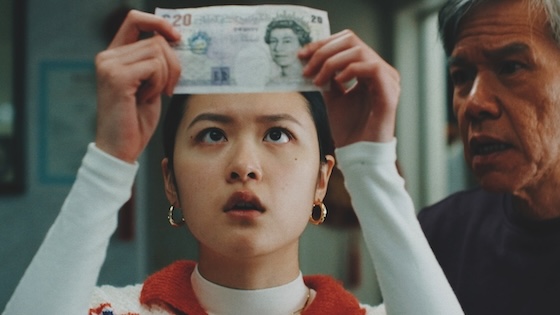
Image credits: Film stills from Panda (2026), sourced from IMDb & 伤寒杂病论 (2026) accessed from DOUBAN. Images are used for editorial purposes only. (Copyright belongs to the respective owners)