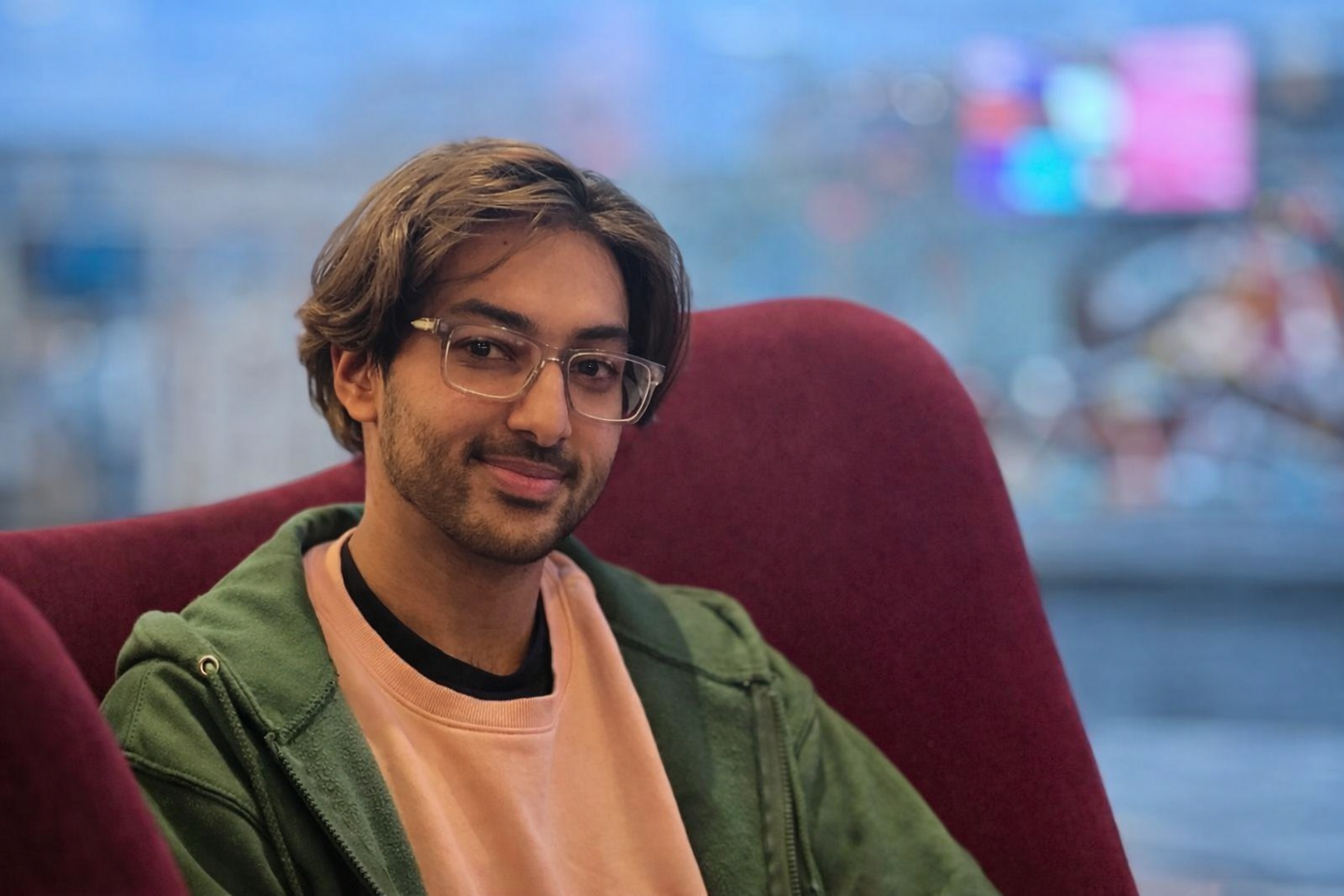
Leicester-based filmmaker Vijay Chauhan is an emerging voice in British independent cinema, approaching storytelling from an unconventional background. Trained originally in theoretical physics, Chauhan made his writing and directing debut with the independent short Park Bench, that succesfully premiered at the Mohjoh Film Festival, before being announced as the director of the UK remake of the Hong Kong romantic drama My Indian Boyfriend, set in Leicester under the working subtitle The Golden Mile.
According to Variety, the UK remake is being executive produced by Sri Kishore, director of the original film, alongside U.K.- based Hong Kong creative Hiu Man Chan, with production currently in development.
In this interview, Chauhan reflects on his transition from science to filmmaking, his early creative process, and how he is approaching cultural adaptation as he prepares for his feature directorial debut.
Fatima: You come from a background in theoretical physics, which isn’t a common route into filmmaking. Do you feel that training still shapes how you approach writing or directing, even subconsciously?
Vijay: I think what I’ve experienced with screenwriting is that it’s very methodical, almost like problem-solving. There are certain marks I want to hit in my scripts, but I have to find the right order for them to land so they affect the audience in the way I want them to. I see that very much as a problem-solving process.
I’ve had a lot of experience dealing with methodical problems through my degree, and I think that’s been quite helpful. I’ve spent a lot of time solving complex problems, so yeah, I do think that background is very useful when it comes to scriptwriting.
Fatima: Was there a particular moment when filmmaking shifted from an interest into something you felt you had to pursue?
Vijay: A couple of years after my degree, I was getting rejected from a lot of applications in data science-related fields. At the same time, I was getting more into film. I’d always loved films since I was a kid, but after university I really started engaging with them more deeply.
I also wanted a creative outlet, because I hadn’t really had one since primary or secondary school. I started trying creative writing, beginning with short stories, although I never really finished any of them. Then I thought, since I love films so much, why don’t I try writing a screenplay?
Around that time, I met a friend of a friend called Rishi, who’s also into filmmaking. He actually worked on my short film. He said “Just write a script and we’ll go out and shoot it.” After that, I finished Park Bench about two weeks later, and we went out and shot it.
While I was writing it, I realised it was actually really fun. But directing it? That’s when I felt this was the most fun part of the process. I really enjoyed the entire experience of writing and directing. It wasn’t one single moment, more a build-up; but if I had to pinpoint one, it would be when Rishi told me we could actually make something. That made it feel feasible.
Fatima: Park Bench was both your writing and directing debut, and you made it independently. Now that you’re navigating your second project as an adaptation, how has your approach to storytelling shifted, particularly when moving from naturalistic dialogue to cultural adaptation?
Vijay: I spoke to the original director of the film, Sri Kishore, and he was very enthusiastic about a UK remake. He’s also given me a lot of creative liberty to make it my own. Obviously, there are still many things we’re keeping from the original film, but it’s been new and challenging because it’s not a completely original idea, even though there are a lot of original ideas going into it.
The core premise stays the same, an Indian guy and a Chinese girl navigating a relationship, but there are many new concepts and ideas I want to bring into that framework, especially because it’s set in a different place. We’re in Leicester rather than Hong Kong, and that opens up a lot of doors to take the story in a slightly different direction.
Fatima: You’re directing the UK remake of My Indian Boyfriend, a film that already has a strong cultural specificity. How do you approach translating a story like that into a new context without losing what made it resonate in the first place?
Vijay: Good question. For the Indian character, Krishna, there’s a lot of Indian culture in Leicester, which is of course different from the Indian experience in Hong Kong, but there’s still a very rich history here.
In regard to Jasmine, the girl from Hong Kong, there is also a strong Chinese cultural presence in Leicester. In my remake, she’s an international student from Hong Kong, so she brings a lot of her own culture with her as well. That allows the story to remain culturally grounded.
Fatima: You’re still in the casting phase for the remake. What qualities are you prioritising in actors for a story like this: chemistry, lived experience, something else?
Vijay: For the main characters, the most important thing is good chemistry between them. Aside from that, they need to feel confident in the role and ideally be able to bring some personal experience into it. They need to really live in the character.
If you saw them randomly on the street, you should be able to imagine them as that character; a sense of authenticity within them.
Fatima: Having worked independently and now within a larger production framework, what’s been the biggest adjustment for you when it comes to collaboration?
Vijay: I think the biggest challenge at the moment is that there’s just a lot more going on. I’m writing the script, but at the same time we’re finding a crew, looking for funding, and casting. Doing all of that alongside the writing is a big shift, because previously I could just focus on writing without worrying about everything else.
Now we’re working to a schedule, we have deadlines we’re trying not to miss, and there’s a lot to organise in the short term. It’s just a much bigger process overall.
Fatima: At this stage in your career, what kinds of stories are you most drawn to telling next?
Vijay: I really like dramas, I’m drawn to telling dramatic stories, especially complicated relationships between people. Dynamics you have seen before, but not always playing out in the same way, not necessarily romantic but familial relationships as well as friendships can be as complex, especially family.
In the future, I might explore sci-fi and use my theoretical physics background; maybe both, along the lines of Interstellar, drama and sci-fi. But at the moment, drama is my main focus. Park Bench was a drama, and the My Indian Boyfriend remake sits across romance, comedy, and drama. Those are the genres I’m most interested in right now, with drama as the driving force.
Fatima: Would you say your work is character-driven?
Vijay: Sometimes I’ll think of a character first and a story will come from that; other times I’ll have a story and then need to flesh out the characters.
If the characters come first, they’re usually based on people or personalities I’ve seen before. But if the narrative comes first, I build the characters around it, which is the scenario most times.
As Chauhan prepares to make his feature directorial debut with My Indian Boyfriend: Golden Mile, his work reflects a clear interest in character-led storytelling and cultural specificity rooted in place. By drawing on Leicester’s diverse communities while remaining attentive to collaboration and adaptation, Chauhan positions himself as a filmmaker interested not just in stories, but in the social contexts that shape them.
With a background that bridges science and cinema, and a growing body of work grounded in drama and human relationships, Chauhan is an emerging voice to watch as independent filmmaking in Leicester continues to expand.

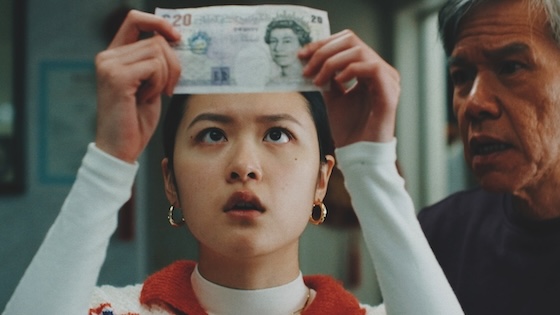
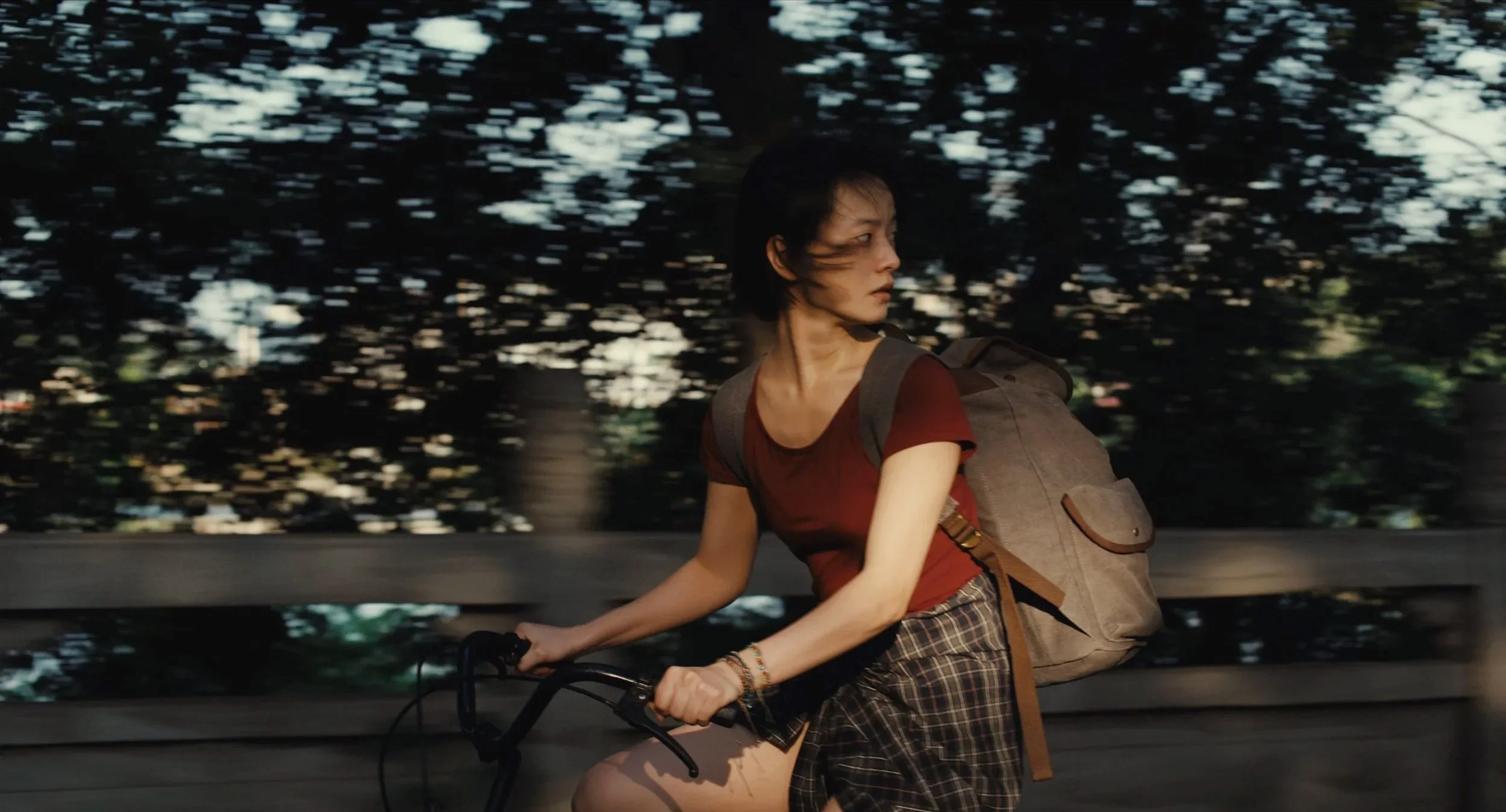
Image credits: Film stills from My Indian Boyfriend (2022), accessed from South China Morning Post(Copyright belongs to the respective owners)