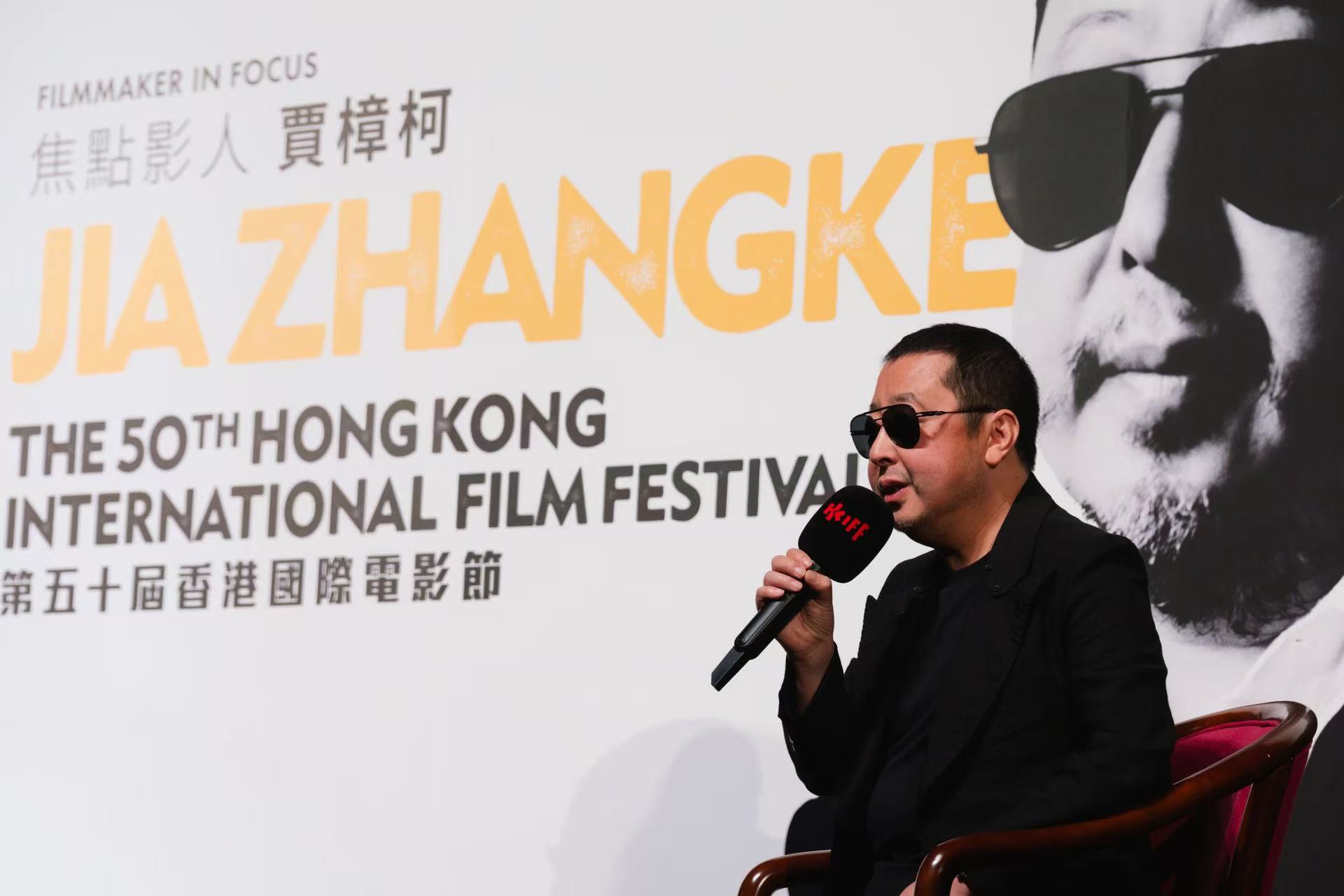
The 50th Hong Kong International Film Festival (HKIFF50) honoured Jia Zhangke as its Filmmaker in Focus for the Golden Jubilee.
Renowned for his distinctive realist aesthetics, Jia is a key figure of China’s celebrated “Sixth Generation” of filmmakers. His work explores themes of dislocation and identity while reflecting China’s societal changes over recent decades.
In honour of Jia’s contributions to cinema, the festival showcased his influential films, published a commemorative book, and produced a limited-edition notebook in collaboration with Moleskine. Jia also took part in a Face-to-Face session to share his insights with the public.
Albert Lee, Executive Director of the HKIFFS, said, “Jia Zhangke has long-standing ties with Hong Kong and our festival. Introducing his first feature film, Xiao Wu, at our 22nd edition opened a window for audiences to appreciate his enormous talent. As we celebrate our golden jubilee, featuring Jia as our Filmmaker in Focus is profoundly meaningful.”
Born in Fenyang, Shanxi, in 1970, Jia’s formative years coincided with the reforms of the 1980s. His experiences in a county town became recurring themes in his early filmmaking. After graduating from the Beijing Film Academy, his short film Xiaoshan Going Home won the Gold Award at the Hong Kong Independent Short Film and Video Awards (ifva), launching his career.
His debut feature, Xiao Wu, marked a significant international breakthrough, winning the Wolfgang Staudte Award at the Berlin International Film Festival and the New Currents Award at the Busan International Film Festival. Along with Platform and Unknown Pleasures, it forms his acclaimed “Hometown Trilogy,” highlighting the challenges faced by a young generation amid China’s transformations.
In 2004, The World saw Jia shift focus to the globalisation landscape. He has since built long-term collaborations with actress Zhao Tao, Hong Kong cinematographer Nelson Yu Lik-wai, producer Chow Keung, and Taiwanese musician Lim Giong.
Jia’s documentary Dong inspired the narrative film Still Life, which won the Golden Lion at Venice for its portrayal of displacement. This blend of fiction and documentary continued in 24 City. His later works, including Mountains May Depart, Ash is the Purest White, and Caught by the Tides, capture the emotional detachment of a generation amid rapid changes in industrialised China.
Beyond directing, Jia has produced over 20 projects, including All Tomorrow’s Parties, Plastic City, and Perfect Life, and initiated the Wings Project to support emerging filmmakers. He has received the Honorary Golden Leopard Award at the Locarno Film Festival and the Golden Coach Award at Cannes. In 2017, he founded the Pingyao International Film Festival (PYIFF) and has served as the inaugural Dean of the Shanxi Film Academy since 2021.
Jia’s work showcases a fusion of realism and cinematic poetry, reflecting the evolution of Chinese society. The Hong Kong International Film Festival is proud to welcome him as its Filmmaker in Focus, celebrating his achievements and contributions to cinema.
Selected Filmography
Xiao Wu (1997)
Platform (2000)
Unknown Pleasures (2002)
The World (2004)
Still Life (2006)
24 City (2008)
Mountains May Depart (2015)
Ash Is Purest White (2018)
Filmmaker Biography
JIA Zhangke was born in 1970 in Fenyang, Shanxi Province, and graduated from the Beijing Film Academy in 1997. He started making short films during his studies. His 1996 short Xiao Shan Going Home won the Gold Award at ifva. Xiao Wu, his debut feature, premiered at Forum, Berlinale in 1997. His works have since been selected for and awarded at many major international festivals. One of the most influential creators and promoters in contemporary Chinese cinema, he is also an active producer. In 2017, he founded the Pingyao International Film Festival.