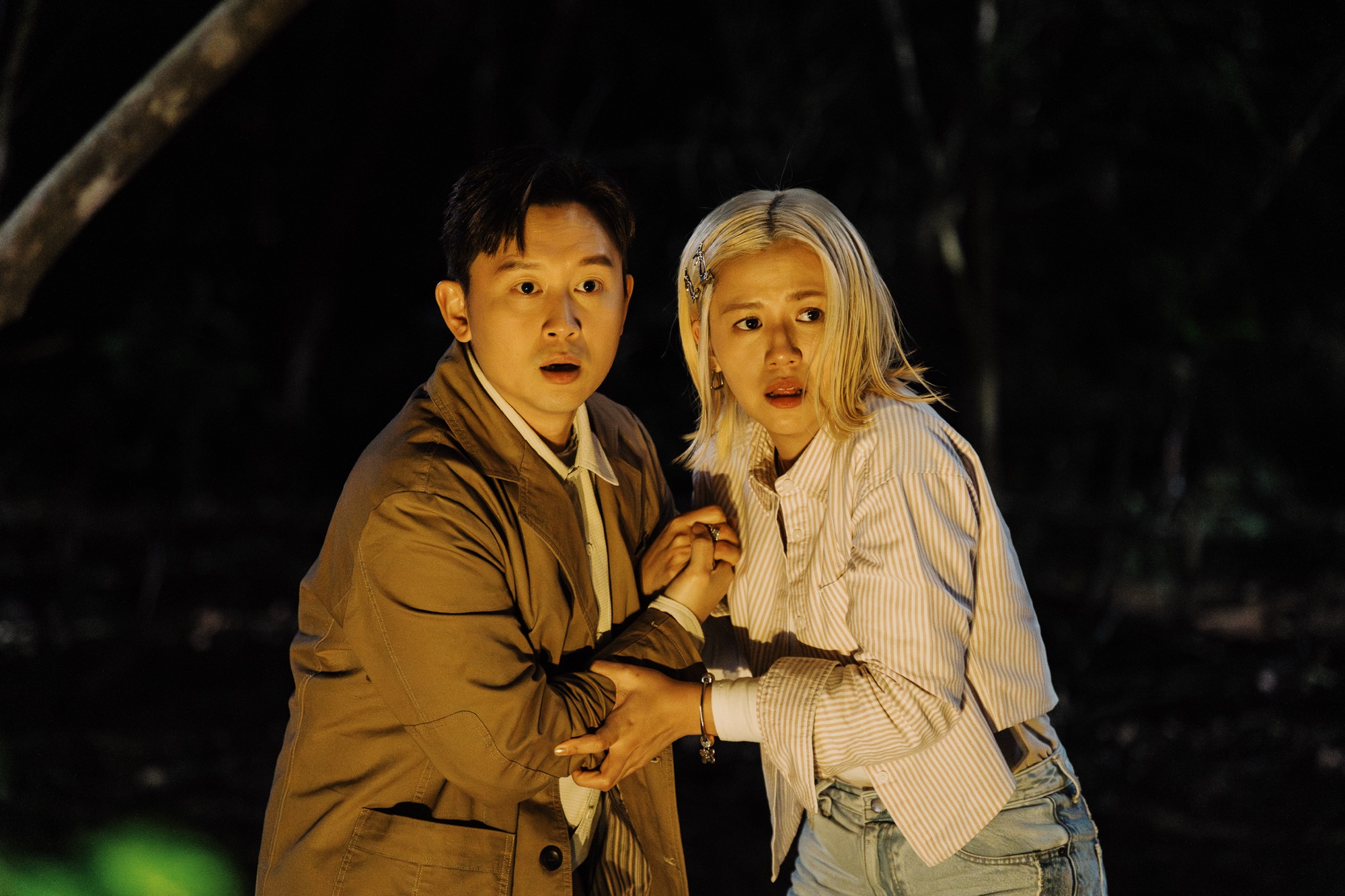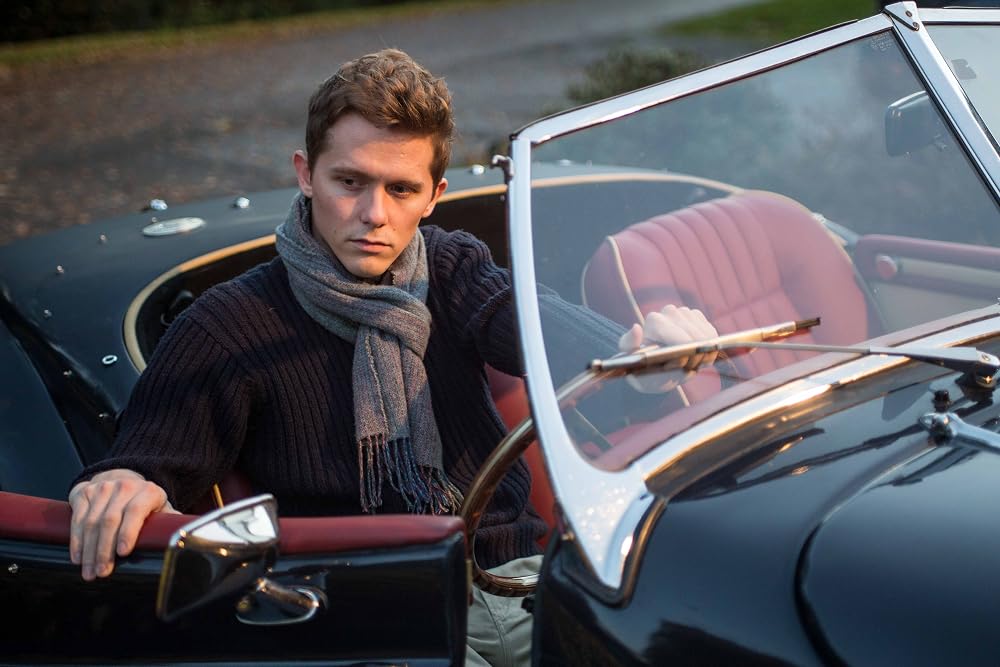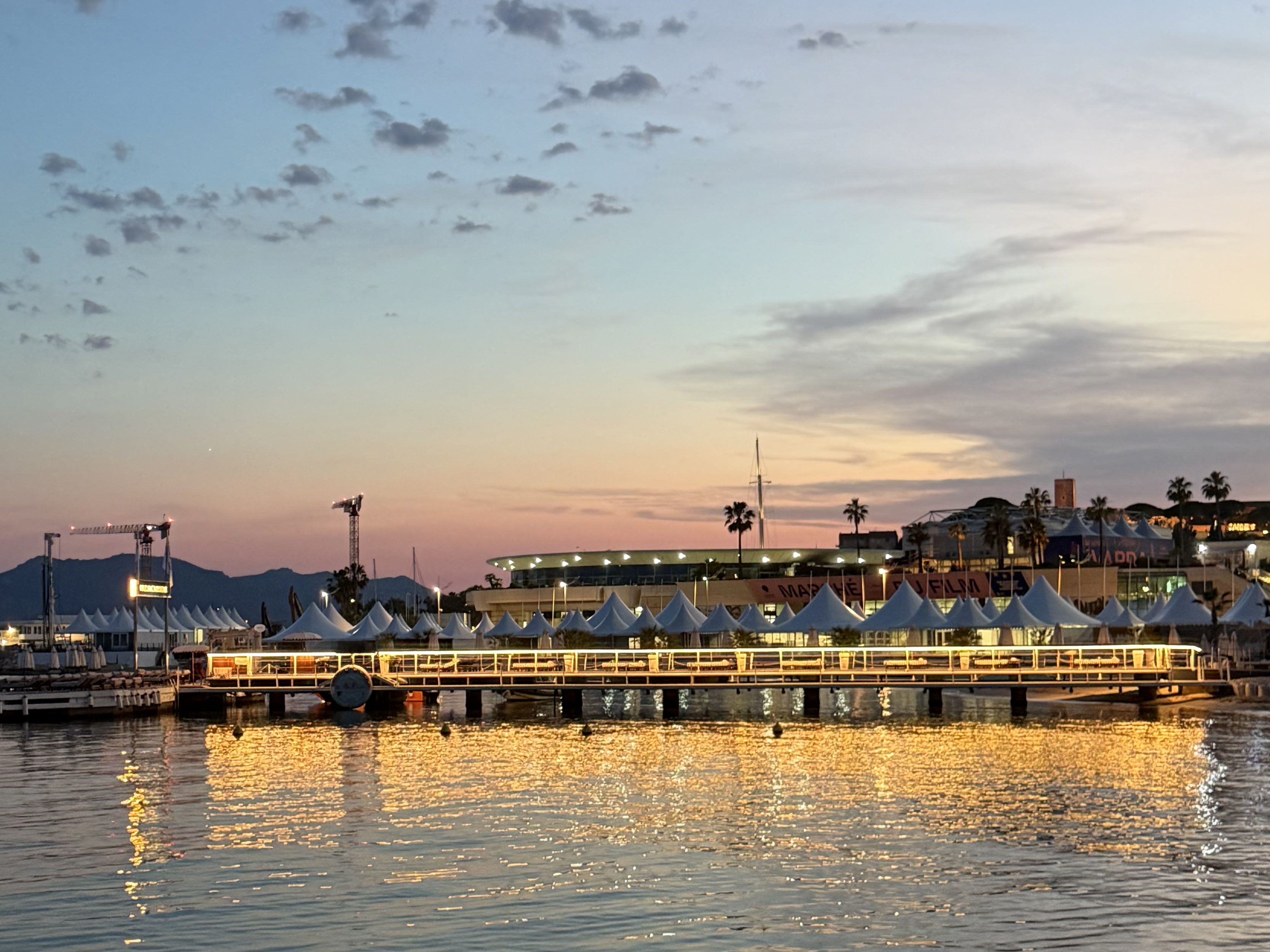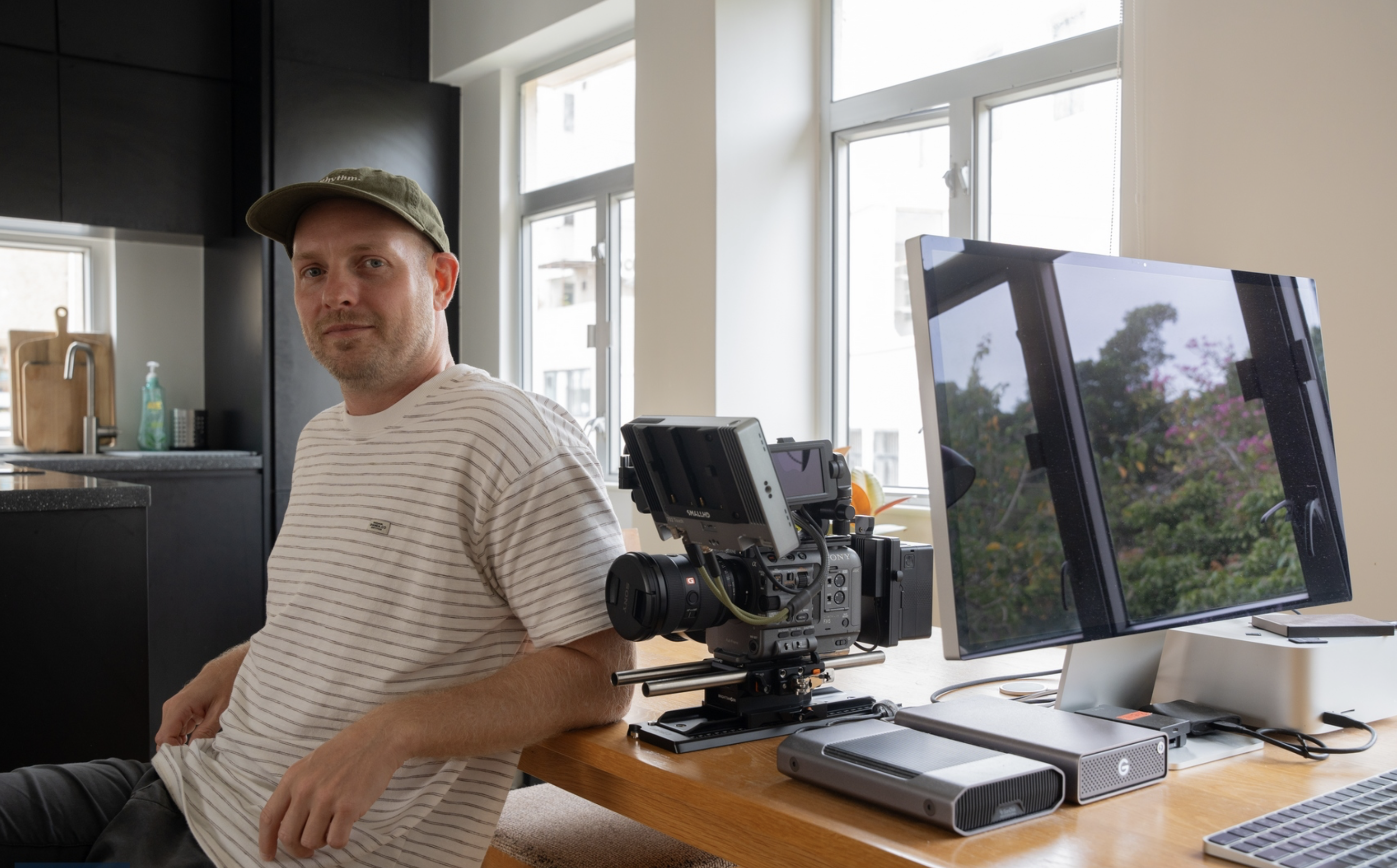
Filmmaker Robin Lee is the director of Four Trails, a feature documentary chronicling the Hong Kong Four Trails Ultra Challenge, a 298 km endurance test across the city’s most demanding mountain routes. Having first explored the event in his 2019 short Breaking 60: Challenging the Impossible, Lee returns with a full-length portrait of human perseverance. Four Trails is currently showing in cinemas across the UK.
Chris Lau from the UK distributor’s team spoke to Robin about his unconventional journey into filmmaking, the years-long process behind Four Trails, and what he’s learned from bringing Hong Kong’s wild side to audiences around the world.

Chris Lau: How did your filmmaking journey begin?
Robin Lee: I studied design at school and was quite good at art, but film never really crossed my mind, even though I love watching films. I started to take it seriously when I was 21 years old, and the reason is that I really loved skiing. Part of the culture of skiing involves getting a camera and filming yourself and your friends together, then posting the video online or sharing it amongst your friends. I filmed stuff with my brothers when we went on ski holidays, and we would post them online on a skiing website for people to watch. That kick-started the idea of filmmaking. I first started with a GoPro camera, and then I upgraded to a Canon 7D, which allowed me to change the lens. When I came back to Hong Kong, I filmed cliff jumping, creating videos for myself and my friends.
By doing that, I started getting noticed by friends who had started companies and other people who wanted video content to be made. I was hesitant at first because I just really enjoyed making films, but I didn’t really think of it as a career, and I was worried that it would ruin the hobby. But I also didn’t know what else I was going to do for work, so I decided to give it a go. I think the whole film career just started kicking off from that. I worked on bigger and bigger projects, and I had a full-circle moment when I won a competition organized by the company whose ski films I used to watch every single year, then I started working with them for about five years, making ski films.
When I was looking for the next thing to do in my career, my brother, who was a trail runner, told me about the Hong Kong Four Trails Ultra Challenge. I think it has the potential to be a film, but I had no expectation of where the film could go. I just wanted to try and do it, so it became a passion project of mine and my brother. So, my filmmaking journey is very organic, as I never went to film school nor studied film properly; I just taught myself how to do everything.
Chris Lau: Before making the feature film Four Trails, you made a shorter documentary titled “Breaking 60: Challenging the Impossible” about the Hong Kong Four Trails Ultra Challenge. How did the project come about? What did you learn from making this short version of the documentary?
Robin Lee: I would come back from overseas ski trips and miss being in the mountains. My older brother started trail running, and I thought there must be some projects we could do in Hong Kong which would give me the same exciting feeling. He told me about this challenge, and I thought this would be the perfect event to film, as I love films about extreme sports. We then spoke to Andre Blumberg, the founder of the challenge, and just started filming immediately. I consider the short film my “university degree” in my journey of documenting four trails, as I was making it as I was learning about the challenge. We only interviewed four runners and only had three or four crew members in our team during the race – it was really fun making the film, but there was quite a lot missing from it, mainly because, in some ways, I didn’t know what I was getting myself into. I decided to come back to do a feature-length version of the challenge after learning so much about it from making the short version of it. There’s definitely the potential to do something bigger, and there’s way more stories to uncover than what I initially thought when I heard about the event the first time.
In terms of the technical aspect, something I learned from making the short film is that, to have a good coverage of different characters in the 300-kilometre four trails challenge, I need a bigger crew. There were so many locations that I wanted to go, but I couldn’t do that when I only had a small crew. On a storytelling aspect, the short documentary was called “Breaking 60” because we were so focused on whether it was possible for a participant to finish the race within 60 hours. We were just thinking of the fastest and best runners, but later I realized that this challenge had never really been about breaking 60 or who could be the fastest. Some people want to do that, but four trails is actually not a race, but a challenge. There are no medals and no rewards. The idea behind it is just a self-challenge about whether you can push your boundaries. You may not be someone who can break 60, but you can be someone who finishes within 72 hours. There is a certain bravery in just going to the start line, knowing that you might fail, but giving it a go anyway. So, when making the feature film, I knew that we shouldn’t only be celebrating finishers, but anyone who even tries to attempt a challenge like this. It is a film about every participant and their own personal goals.

Chris Lau: With Four Trails in post-production for several years, how did you manage to balance it with your other work?
Robin Lee: I always call the editing of the film my own personal “four trails”. I edited the film during COVID, which made things a little bit more complicated, because I was just by myself, and if I wanted any opinions, I would have to export a part of the film and send it to somebody else, but they had no idea what I was doing because they couldn’t see other parts of the film. Balancing it with my other work was more like a mental thing than a practical one, because I could be focusing on the editing of my film for weeks, and then when a job come up I had to put Four Trails to one side, and later when I came back, I might need a day or two just to remind myself where I was in the editing process. I also started to turn down some paid opportunities, as I realized that I needed to do that to get this film finished. Financially, it’s not great, but the film would never be complete if I just kept taking on other work.
In other ways, though, the time it took to finish this project could be seen as a positive, as I had more time to think about it. I could go back to things and think of ways to improve them or come up with new ideas. The film had no investor other than myself and my brother, so there was no sort of deadline for it to be finished, and it allowed us a lot more freedom in editing and post-production.
I never really let Four Trails go, though, as my self-motivation was really high. I was always excited about the project, even a little bit obsessive! I was on a holiday with my girlfriend, where we went on a hike in the Pyrenees, and I was still constantly thinking of ways to improve the film! Of course, I had my low moments too, just like the runners in the film, when I had no idea how to edit certain parts or some stuff not turning out the way I thought it would be. You just have to find a way to get past that, which I luckily managed to do.
Chris Lau: How was your experience taking Four Trails outside of Hong Kong and meeting overseas audiences?
Robin Lee: Four Trails has been shown in a lot of countries, which is incredible. I have done so many screenings in Hong Kong and have heard the same comments a lot – the Hong Kong audience loves the film because it shows off Hong Kong, they love the perseverance in it, and it reminds them of their own stories. But when it comes to taking the film outside of Hong Kong, we have a completely different audience – people who may never have been to Hong Kong and may not even know Hong Kong. To hear their reactions being just as positive as those from Hong Kong is a really nice feeling.
The host at the Odyssey film festival in the UK came up to me after the film and told me it was epic, and he was hooked for the entire film, but it turns out that he has never been to Hong Kong. It’s amazing that you can still find the film entertaining and be on the edge of your seat, even though you are not from Hong Kong and have not seen the landscape before. It is heartwarming to learn that this isn’t just a film for Hong Kong audiences, but a film for everyone, and even if you don’t enjoy sports yourself, there is a story in there for you. To have the same positive reaction in the UK and other places is a testament that we did make a good film.
Chris Lau: What do you think makes Hong Kong’s hiking trails so special in comparison to those in other countries?
Robin Lee: I think what makes Hong Kong special compared to other places is that its trails are so convenient. In France, for example, to go hiking in the mountains, you have to drive to the Alps or to the Pyrenees, so if you live in Paris, you need to drive for six hours just to get to the start of the hike. I live in Stanley in Hong Kong, but it actually doesn’t really matter where you are, as you can get to the top of a mountain within an hour of where you live. It is so convenient. If you love being in the city but you love nature, you have both in Hong Kong. Also, when you are, for example, in the Alps, you just see mountains everywhere, but in Hong Kong, you are looking over one of the most impressive skylines in the world on Hong Kong Island, or you can be in Sai Kung looking at amazing white sand beaches. Trails in Hong Kong can offer so much variety.
Chris Lau: What is your next project after Four Trails? Are you planning to make more documentaries or even live-action films?
Robin Lee: Some people have indeed come to me saying that they think Four Trails could be turned into a live-action feature film, which I think in itself is a praise for the film we made! Four Trails has been my own passion project for five years now, and it’s taken all the energy I have. It’s so all-consuming that it’s quite hard to think about the next project, but I would love to make another documentary. Making Four Trails has probably been the most rewarding experience I’ve ever had in my working career so far, and it’s something which I didn’t think I would ever experience. Four Trails has given me the confidence that I can do it. If another opportunity arises to do something like this, I would definitely want to try and give it a go.
Chris Lau: What would your advice be to someone interested in documentary filmmaking?
Robin Lee: I think the hardest part is always just starting whatever project you’re trying to do. Even for Four Trails, it still took me some time to be like, “let’s do this”. The reason I got hooked and obsessed with Four Trails is that I just went and filmed one thing, which was Will, one of the runners, doing a training run around Lantau. Just by doing that, it gave me so much inspiration, and it just made me really excited. Just going out one time and filming something, which didn’t even make the final cut at all, created that spark that made me really want to do the film. The best advice for anyone is you just have to take the first step and do it. If you’re interested in a project, just go and do the first thing, and if, after doing that first thing, you’re still excited to do it like I was, then it’s just going to be so natural. If you do it and you realize that it’s actually not as fun as you thought it would be, then you can move on to another idea. Take the first step, don’t be afraid to do it, and hopefully, good things will come from that.
I started my career just by going out and filming stuff myself. So, another piece of advice is that, even if you’re not working on a film project, just keep creating content. It does not matter that it’s just one or two minutes long. The more you make, the more you learn. It’s important because if you just sit at home not doing anything, then you’re not going to learn. Even if the work that you did doesn’t go anywhere, just by doing it, you are learning, and when you do get hired to do something or a good idea comes to your mind, then at least you’ve already got the experience of trying in the past and getting comfortable with your equipment for these new projects.
Image credits: Four Trails & Atlas Production / Robin Lee Official Website
Chris Lau is a London based film producer, Co-Lead Curator of Odyssey 2024 and an Honorary Member of the UK-China Film Collab.