The Testament of Ann Lee premiered at the 82nd Venice Film Festival, and will be released in the UK by Disney on 20 February 2026.
No Spoilers
During the Evangelical revival in England, The United Society of Believer in Christ’s Second Appearing was founded in 1747. A decade later, in 1758, The Shakers, a radical religious sect, were officially created by its member Ann Lee, a visionary spiritual leader regarded by her followers as the female representation of God. Founded in England, and later thriving in America, the Shakers were one of the largest utopian communities in American history. Today, only three members remain.

Drawing from the real history of the Shaker movement and its founding leader Ann Lee, The Testament of Ann Lee, a historical musical drama by Mona Fastvold premiered at the 82nd Venice Film Festival this year. The film is divided into chronologically ordered chapters, following the life journey of Ann Lee (Amanda Seyfried), from her childhood to her death.
As one of the very few female religious leaders, the historical figure left behind rather limited information for us. To understand her spiritual transcendence, the first chapter’s focus on the early stage of her life and her marriage is essential. Born into a working-class family of ten in Manchester, she later married Abraham Stanley (Christopher Abbott). She birthed four kids but all died before turning one. Haunted by the loss and grief, struggling to survive it through religion, the camera cuts between sequences of explicit sexual intercourse, brutal childbirth, and intense worship. Suffering, then reborn, the anguish in the woman’s body and mind is healed by her worship of God, bringing her the vision from the reappearing of God. Then, Ann Lee turns into Mother Ann – shifting from a mother of four lost infants to a mother of a spiritual community.
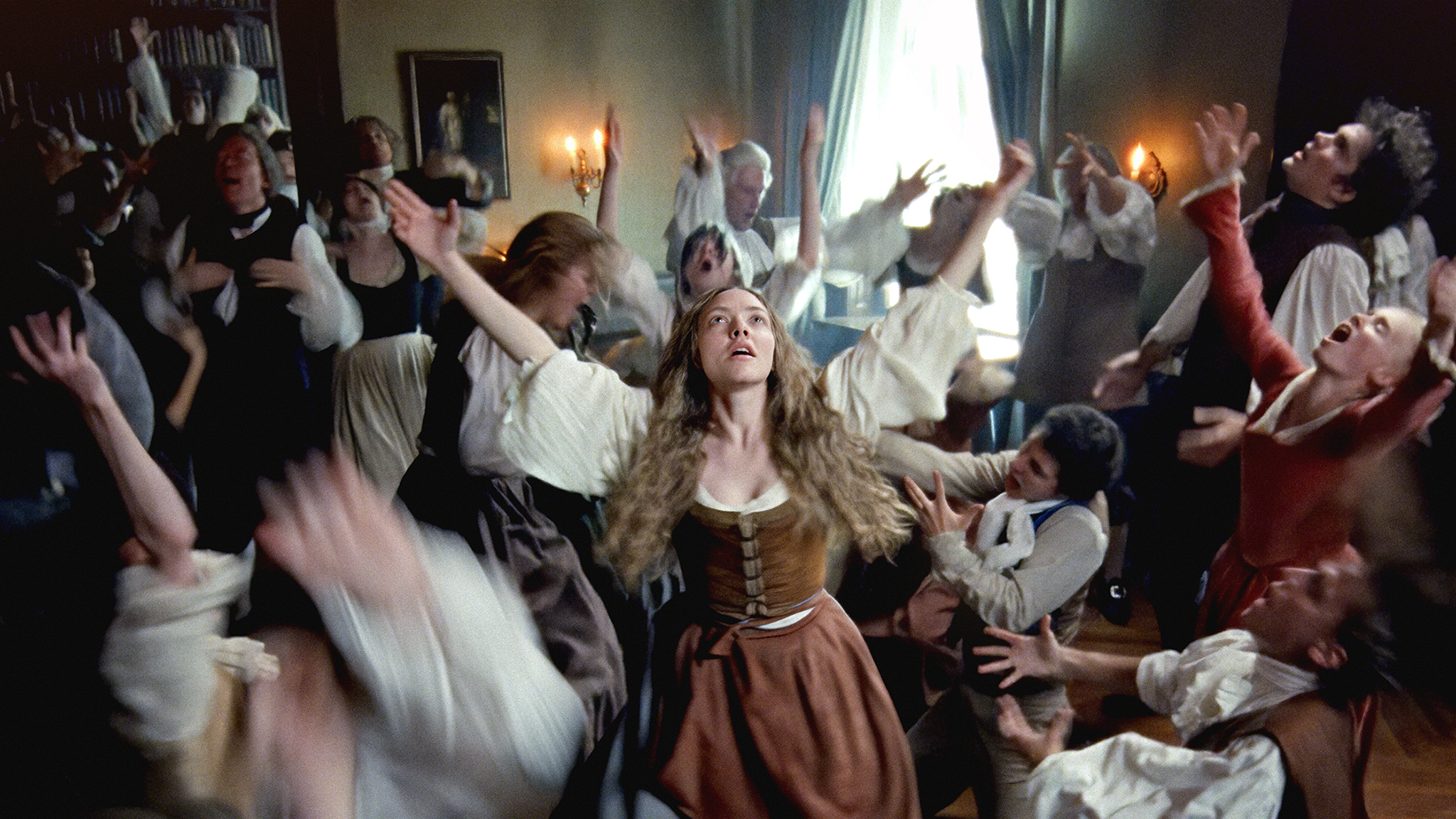
In 1774, receiving a divine revelation from God, Ann Lee decided to preach her gospel views to America. The ecstatic dancing and singing worship embodies her spiritual power in each chapter. In the second chapter of sailing from England to New York, after a dreadful storm, one of the film’s most powerful sequences occurs. Leading with Amanda’s vocal, a soul-shaking dance on the ship in the stillness of a post-storm morning hits hard with strong emotional force; along with the enthralling editing of the repetition of shots in different seasons and weathers. The film reaches an emotional peak here.
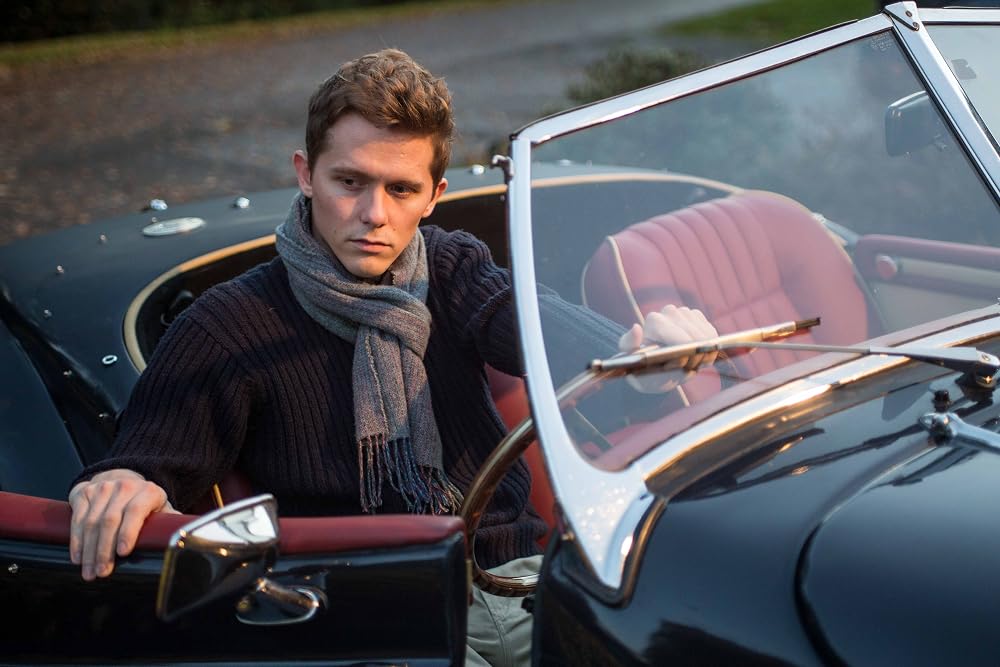
Upon arriving in New York City, Ann’s husband Abraham and her niece Nancy (Viola Prettejohn) leave the Shakers, unable to commit the vow of celibacy. Ann, her brother William Lee (Lewis Pullman), and other followers persist and expand the community. All of her beliefs – natural craftsmanship, communal living style, gender equality, celibacy – make an impossible utopia possible. In 1784, Ann died at 48, after fighting persecution to protect the community that she and her followers devoutly built.
Rather than debating religious radicalism, Fastvold focuses on Ann Lee’s inner spiritual transformation: a painfully wounded woman finds her faith in the greatest love, and a gentle yet unshakeable leadership in a patriarchal, slavery world. Shot on 35mm, the grainy texture in the candlelit sequence creates a sense of presence, a space for the audience to immerse themselves in the natural black. During the large amount of choreography sequences, camera moving from one dancer to another like a participant, a visceral intensity builds through a series of close-ups of their fierce physical movements.
Composer Daniel Blumberg is an indisputable asset to the musical drama. He proves his talent again with incredibly mesmerising score and original songs. The English musician has worked with Fastvold and her partner Brady Corbet on The Brutalist, for which he won the BAFTA Award and Academy Award for Best Original Music. Drawing from original Shaker hymns, he adds a contemporary touch to these simple melodies with electric guitar, piano, percussion, and even animal sounds. The songs kept ringing in my head after I left the cinema. He and Ludwig Göransson for Sinners have my full support in this awards season.
Although Amanda Seyfried has secured a Critics’ Choice nomination, I consider The Testament of Ann Lee profoundly underrated. The epic choreography, the spellbinding music, along with an accurate and audacious portrayal of a female spiritual leader, radiate ravishing splendour across its 137 minutes. I felt baptised by its sacred force. I was shaken every time they shout, dance, sing, or slam their hands against their chests. The tremendous life force released through each gesture, yell, rhythm, and lyric penetrates the camera, vehemently shaking the very air in the movie theatre. At a certain point, we all become one of them.
It’s simply a mind-blowing cinematic experience, and I can’t wait to buy the soundtrack album.
Image credits: Film stills from The Testament of Ann Lee (2024), courtesy of Ritz Cinemas / British Film Institute (BFI). Copyright belongs to the respective owners.