‘This film is about listening’ – Nawapol Thamrongrattanarit
Director Thamrongrattanarit discusses his latest feature, ‘Human Resource’ and the landscape of filmmaking in Thailand.
Part of Private Waves’ coverage of the BFI London Film Festival 2025

Senthoran: From 2015’s Heart Attack to Happy Old Year (2019) and Fast and Feel Love (2022), your primary narrative focus has been on the artist struggling with the limitations imposed by society. Human resource is a sharp shift in mood.
What led you to take a look at back-office administration and the mundane everyday?
Thamrongrattanarit: I’m 40 now and at a point in life where I’m contemplating fatherhood – whether to have a child. This questioning leads me to reassess everything.
As to the focus of the story, corporate life is the reality for many young people in Thailand. I, myself have to work with investors and large companies in the context of commercial filmmaking. There are a lot of conditions and requirements, and sometimes I am having to do things I may not necessarily want to do.
When you are young, this frustrates you to no end. With experience, you accept this as normal. I think it’s time to stop and think again. And that is why in my filmmaking I don’t go the route of fantasy to provide escapism. In a way, I engage in what can be considered ‘Slow Cinema’, to give the audience the time and space to really reflect. Especially for the audience who are office workers whose life is consumed by their work and have no time to reconsider.
Senthoran: You mention the question of considering having a child. In Human Resource, Fren’s pregnancy is the primary source of narrative tension throughout the film. Everyday conflict is heightened by her vulnerability and there is a sense that Fren is assessing whether the world is safe for a child. At many points, that answer would be no.
Is this your assessment, or a personal perspective.
Thamrongrattanarit: A lot of the situations you refer to are regular happenings in Thailand. Motorcycles everywhere.
Sometimes you are confronted with things that are wrong but it’s difficult to approach it in a straightforward way. For example, the husband wants to do the right thing, but he doesn’t have power by himself. He seeks political connections and leverages them. For the average person, this is impossible.
It isn’t easy. We want to do the right thing but the circumstances we find ourselves in are so different. Birthplace, class, situations – whether it’s destiny or providence, a lot just isn’t in our hands. And that’s hard to accept.
Senthoran: As you mention, professional connections play an important role in the film. Whether it’s the advice of having a water filter, or helping to bail couple out of problem. It’s interesting to note that Fren works in recruitment.
To what extent is there a commentary on meritocracy in Thailand?
Thamrongrattanarit: For young people in Thailand, you have to have everything. It’s all about working hard and building connections to go to a better place. I think this is part of an unfortunate working culture across South East Asia. The regular workers have no say in this, because the system is all-so-perfect. ‘There is no other way’.
Senthoran: You convey this poignantly when the couple are looking at prospective international boarding schools to be booked to in advance.
The school feels as sterile as a dentist waiting room. The children are packed into the frame, scurrying in the closed playground like an experiment gone wrong.
Thamrongrattanarit: This film can be considered a demonstration to the unborn child of how the world operates. This is the next generation looking at their future from above. The camera being pointed from above is almost a God’s point of view.
I use diegetic sound throughout the film for this reason. The podcasts, the radio, the news all serve as sources of information. For context, this film is all about listening.
Another main character is the baby that is listening from within Fren. I imagine the unborn child as a person who can only learn about the world by listening. All this noise is the world that they have to confront with.
Senthoran: That makes a lot of sense. Especially with the radio that plays as the background noise to Fren’s daily commute. Political events seem to be white noise in the current world.
In context, the title, ‘Human Resource’ is a double entendre. Its literal meaning as a corporate function but it may also be a dehumanising term for human capital and labour.
Can you comment on this choice and your intention?
Thamrongrattanarit: Exactly, ‘Human Resource’, is the way corporations look at us. I have been in many meetings with corporations when making films/adverts, and all the decisions are driven by data and efficiency. When they don’t want somebody to fall in line, they resort to firing them. So the people that work in these departments have had to carry out this for so long that they may have lost touch with their humanity.
I have had a chance to talk to ‘Human Resource’ employees, whose job is to hire and fire. The philosophy of hiring is to look at benefit, what a candidate can add to profitability. In a way, this makes sense, to justify a return on investment. When I listen to them speak though, there’s no humanity in it.
I understand that this is their job, sometimes work is this way. Even a filmmaker has to compromise between money and art. But if you ask me, I just don’t like this ruthlessness.
Senthoran: One of the redeeming characters is an intern who, whilst strong at first, eventually struggles under the pressure of corporate scrutiny.
Is this anecdotal or conceptual in nature?
Thamrongrattanarit: It’s conceptual. Again, I want this film to be somewhat neutral in its portrayal. Not that I idolise the corporate life, but I have friends that enjoy their careers there. I can’t judge people’s route to happiness or hopes for a future. The intern fights in her own way. The various characters have their own stance and preferences to mirror reality.
Not everyone is against the mistreatment. Maybe, I am the only person in the world that has a problem with everything. I have a lot of questions and am unhappy with the answers I get. Hopefully one day, I am able to find a solution to live this life the right way. The different perspectives are the different answers I have seen.
Senthoran: The audience was definitely questioned. As I left the cinema, people looked shaken by how cold the film was.
When I look at your filmography to date, whilst there has always been cynicism, it is usually expressed in a darkly comic way.
Does this signal a shift for your cinema in terms of narrative method?
Thamrongrattanarit: So people say I have two styles – the contemplative narrative film akin to Die Tomorrow (2017) and then the dark comedies. Personally, I want to tell various styles. Whilst audiences loved Heart Attack because of how fun it was , I want to tell stories in ways that aren’t just satirical.
I wanted this film to be cold. As you said this starts even with the title. I do feel as though I am a human resource for some of these companies and even society. Perhaps it’s because of the current incompetent government in Thailand which imposes a feeling of hopelessness to the youth, or even the idea that is sold to us – that we are a unit as individuals meant to serve society.
I think Thailand is quite a cold place. Even if it is a tropical country, the overwhelming feeling is chilling. Nobody shows it this way. Filmmakers usually only show Bangkok, and that as a bustling city. When I had the chance to make this film, I wanted to show the other side of the country. There are problems we have ignored for too long. Our society can be lifeless in some aspects and we should acknowledge that.
Senthoran: Could you share an example of a film that exposes a side to a country you had previously not encountered before?
Thamrongrattanarit: In general, as a movie-goer, I am drawn to films that interact with the audience to explore ideas. 2 years ago, Zone of Interest moved me. The film is devoid of plot and the director wasn’t convincing me of a narrative. It was a powerful experience. I hadn’t seen Nazi Germany portrayed this way before. The use of camera angles as though it was CCTV was particularly interesting, especially as it is anachronistic (no CCTV during those times), and felt so intrusive.
Senthoran: Completely different film, but it brings to mind Peter Weir’s Picnic at the Hanging Rock – another film that imbues the definite with the surreal to bring about this uneasiness.
Finally, for readers who want to make film, what would you say as words of wisdom?
Thamrongrattanarit: The film industry is not easy these days. Not necessarily harder, but there’s just so many options for young people. When I meet students at film school, their main motivation may not be to make films – it could be to make TikTok’s or other formats of video. I think this is great, all these new mediums are ways to explore the audiovisual medium in new and exciting ways.
But for the students who only want to make film in Thailand, the market is getting smaller and smaller. Back then, it was big feature film versus small independent film. Now it’s film as entertainment competing with streaming and YouTube.
Actually, I think video games are the largest competitor for the film industry. Game-makers like Hideo Kojima have introduced cinematic qualities to games such as Death Stranding and this has proved exciting for audiences. After COVID, audiences are more reluctant to go to the cinemas and other sources of entertainment are being adopted at a faster rate. The audience behaviour is changing.
For commercial filmmakers it is hard with a changing market. In other ways, it is so much easier with all the equipment at the tip of your hands. Twenty years ago, I had nothing to shoot a film and it took me many years to even get the stuff to make a film. The progress was slow. Now, everyone has access to a decent quality camera and with high quality colour grading, you can even screen these at a cinema.
There are a lot more entries and contact points with the film studios now. People come from making YouTube videos or editing music videos. There are a lot of people trying, but you have got to keep at it. Understanding the business is a must. Being a filmmaker only is not viable depending on the market. I make adverts as a part-timer, so I have to make commercials to make films. Even then, sometimes I get ideas from shooting advertisements, considering a technique or seeing a shot a different way.
Director’s Biography
Nawapol Thamrongrattanarit is a veteran Thai filmmaker, screenwriter, and commercial director. His debut feature, 36 (2012), won the New Currents Award at the 17th Busan International Film Festival. He gained wider recognition with Mary Is Happy, Mary is Happy(2013), a Biennale College Cinema project that premiered at the Venice International Film Festival. His subsequent works include Heart Attack (2015), winning Best Picture at the Thailand National Film Awards; Die Tomorrow (2017), which screened in the Forum section of the Berlin International Film Festival; and Happy Old Year (2019), which won Best Picture at the Osaka Asian Film Festival and was Thailand’s official Oscar submission. Thamrongrattanarit seamlessly moves between studio and independent filmmaking. His latest film, Human Resource (2025), has been selected for the Orizzonti competition at the Venice International Film Festival.
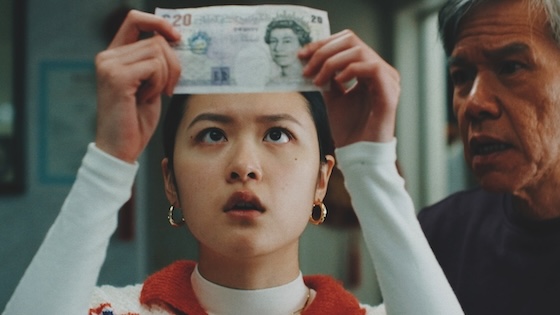
Image credits: Film still from Human Resource (2025), courtesy of La Biennale di Venezia.