Premiering at the 79th edition of Cannes Film Festival in May 2026, in the section La Semaine de la Critique, A Girl Unknown is the heartwrenching, social realist debut feature by upcoming Chinese director Zou Jing. It is moreover the only Chinese feature film to be screened at this year’s festival.
Interviewed by: Amanda Renai Curdt-Christiansen, Lou Cai
Edited by: Lou Cai, Selena Wang
Intro by: Amanda Renai Curdt-Christiansen
The film follows a young girl, abandoned by her birth mother and subsequently passed from family to family, across China, forced to adopt a new identity, social dynamic, and dialect at each turn. ‘Abandoned girls’ were not uncommon in China in the 1980s, though they have rarely been portrayed on-screen.
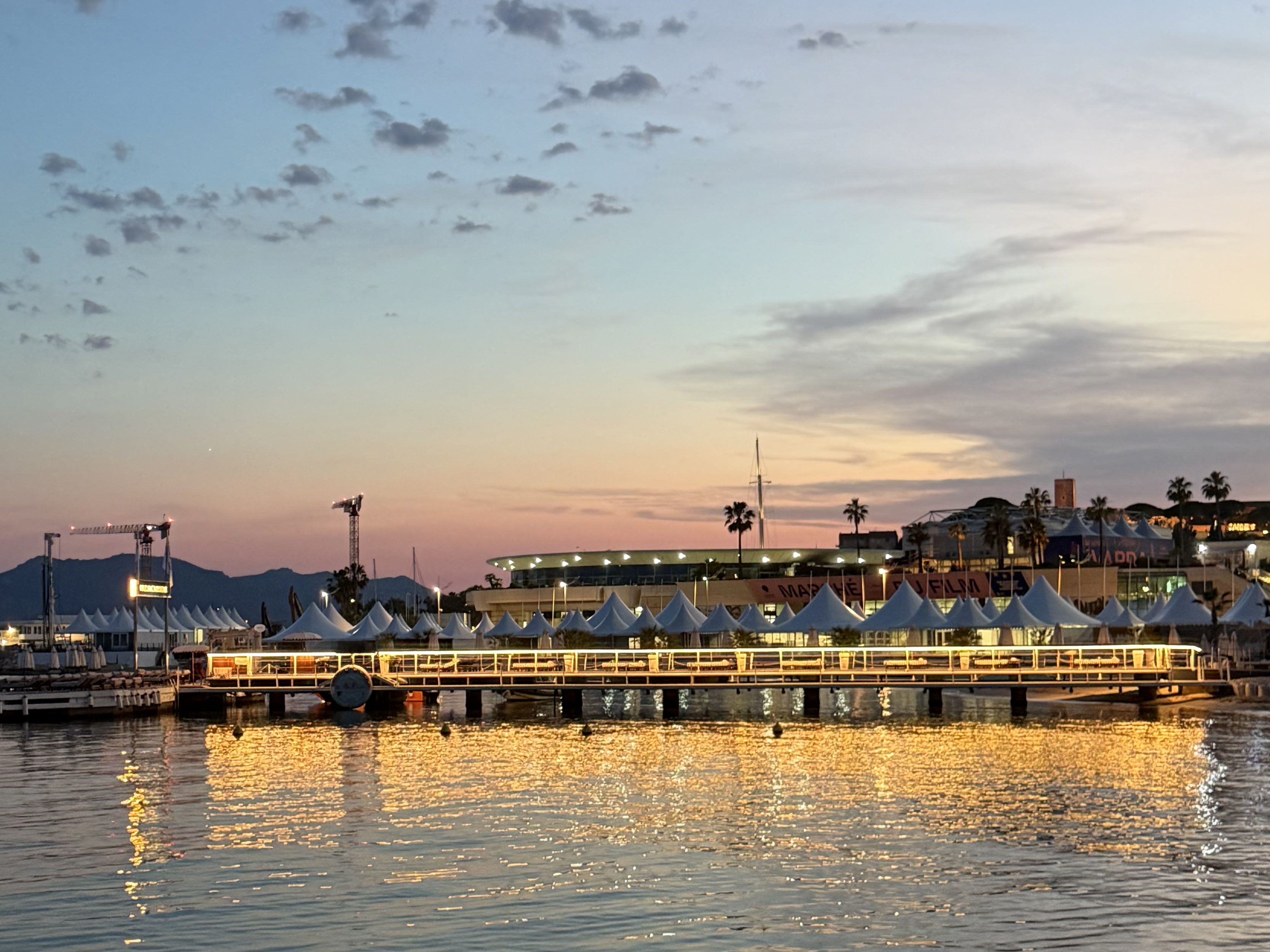
The film’s inclusion at the prestigious Cannes Film Festival emblematises a trend we have taken note of over the past years: the Chinese films on the international festival circuit tend to explore marginalised ‘underground’/’underdog’ voices, and in particular women’s voices. We had the pleasure of speaking to Zou Jing at the Plage de la Critique following her world premiere.
Chinese coming-of-age films about girls have become increasingly prominent at international film festivals. Last year, there was Girls on Wire at Berlinale, Girl directed by Shu Qi at Venice, and of course Girl on Edge, which was selected for Cannes Directors’ Fortnight.
ZJ: And Left-Handed Girl.
Exactly — I loved that film. Do you think festivals are particularly drawn to this kind of subject matter? And more broadly, why do you think girls’ or women’s narratives are especially important today?
ZJ: My film is often categorised as women’s cinema, but there are many films that no one would ever call ‘men’s cinema’ because we don’t really have a corresponding term for that. I find that quite interesting. The male perspective is often treated as the default, even though films centred on men should only make up one half of cinema.
Simply because I am a female director, people may assume that I make women’s films. I find that a bit strange, because male directors are rarely asked the same question. ‘Men’s films’ are simply regarded as ‘films’.
Personally, I don’t think we need to place the label ‘women’s’ in front of films made by women. From my perspective, I simply wanted to tell a story, and it happened to be about a girl. I don’t think films should be categorised or grouped together in this way, because every film is different. It just so happens that half the population is women.
You used to live in LA and now you live in Shanghai. Seeing as you cross borders regularly, and worked with French co-producers for this film, would you identify as a transnational filmmaker? What kind of challenges have you encountered working in China versus overseas?
ZJ: Chinese and American film industries operate very differently. I still identify as a Chinese director because the stories I want to tell are deeply rooted in Chinese culture. During my time in the U.S., I learned a lot about the technical side of filmmaking, but I always felt that the stories I wanted to tell were back in China. In the future, I may explore transnational stories and work beyond China, but for now, China remains my focus. There are still countless stories there waiting to be told.
As for co-production, my collaboration with the French team—both in production and post-production—was very smooth. I had expected some cultural barriers, especially regarding social context, but I found that the emotional core of the story was completely accessible to them. In fact, they were often more sensitive to it. From the feedback after yesterday’s screening, overseas audiences also seemed deeply connected to the film.
I could clearly feel the French team’s emotional connection to the project throughout the process. For example, our composer is French, and I think his score beautifully captured the film’s emotional world and added new layers to the storytelling. It never felt like he was approaching the work from a distinctly ‘Western perspective’, nor did I feel any East–West conflict during the whole production. We were simply united by the same story and working together to bring it to life.
Your short film Duo Li (Lili Alone) was inspired by a piece of news. Was that also the case for this film?
ZJ: Yes! I often listen to podcasts featuring real-life stories and read documentary-style journalism. In one of the articles I read, a journalist followed a family searching for the baby girl they had abandoned. It took them more than ten years to find the girl. When they finally did, she was no longer with the family they had originally left her with, but with a second family. And by the time she returned to her biological family, she already had three different names.
I borrowed this idea of three identities for the film’s structure, though the story and characters are entirely different. The character herself was partly shaped by images from my own childhood. At the beginning of the film, she is surrounded by nature, playing in a dreamlike world, which is very much how I remember my own childhood. Even small details, like her playing with the red ropes, came directly from my personal memories.
Did you have any contact with the real girl from the article?
ZJ: No, her story is very different. In reality, she went back to the original family and they stayed together, she got married, and she has kids. So eventually they reconciled, though it took them years.
You spoke a little bit about your incorporation of personal connections with memories from your childhood. Do you have any other personal connections to the locations or the many different dialects shown in the film?
ZJ: Yes. We shot entirely in southern China, mainly in Guangdong and Zhejiang. I’m from Fujian, and although we initially tried filming there, the locations were not quite suitable. Still, I wanted the setting to retain a strong regional resemblance: the humidity, the trees, and the texture of the landscape. So we preserved that atmosphere while shooting in Guangdong.
I chose to use the Hakka dialect because Hakka communities have a long history of migration. To me, they carry an inherent sense of displacement and outsider identity, which feels closely connected to the character’s experience.
When the protagonist enters a new household, she is also forced to adapt to a new language. The second part of the film is in Cantonese because southern China in the 1990s felt particularly complex to me. It was shaped by Hong Kong and Taiwanese popular culture, early economic opening, migrant labour, and major social changes. I wanted her family and social environment to reflect that complexity. The second family, for example, are not originally from Guangdong. The mother learned Cantonese later in life, while the father does not speak it at all. The film also touches on broader social realities, such as the mass xiagang layoffs of the 1990s.
The third family comes from Hunan, which was also a geographically conscious choice. Hunan borders Guangdong, and many people from Hunan migrate there for work. Even though the film is not a documentary, I still needed the story to feel internally logical. That’s how I arrived at these three locations and linguistic identities.
Did you also approach casting with the same mindset?
ZJ: Yes. The supporting cast for the third family were all from Hunan, and most of them were played by non-professionals instead of actors, some were even friends of friends.
I noticed there are two accounts of sexual assault in the film, but both are cut very abruptly, almost like the way traumatic memories are repressed.
ZJ: Yeah, totally! A lot of people ask me, ‘Why did you make those scenes so brief?’
It made a lot of sense. I think many Chinese women would find that approach very relatable. I know the film hasn’t been shown widely yet, but I’m curious whether you’ve noticed any difference between how European and Chinese audiences respond to it.
ZJ: From the people I’ve spoken to, many felt it was better this way. They didn’t want to see more, and were actually grateful that I didn’t depict the violence explicitly.
So this choice wasn’t related to censorship?
ZJ: No, not at all. It was written that way in the script, and we never shot more than what appears in the film. It was a deliberate choice. Some directors might approach these scenes differently, and I believe everyone begins with their own intentions. But personally, I would find it heartbreaking—I couldn’t bear to watch that. And I honestly think what’s shown is already enough. You don’t need to see more; your imagination can fill in the rest. Sometimes what remains unseen can hurt even more.
There’s a lot in what’s left unsaid in this film, a lot of spaces left to fill out. I wonder what the ending means for you. How should we interpret it? It starts off with water, she’s drowning, and then towards the end she goes into the sea again. Is it supposed to be a message of hope?
ZJ: It’s definitely a message of hope. When I see her walking towards the water, and she’s so small—I feel like it’s like every woman. Sometimes you just have to … it’s you against so many other things. For me it’s like that. Now she has the courage to be against so many other things.
When we were watching the premiere, director Jia Zhangke was also in the room with us, and I noticed some similarities of this film with Jia’s work.
ZJ: Oh, really!
Were you inspired by him, and are you influenced by any other Chinese filmmakers?
ZJ: I think it would be Edward Yang. I’ve always been a huge, huge fan of Edward Yang. I am very thrilled to see Director Jia come to support us. He’s always been very supportive of young Chinese directors.
For the last question, do you have any upcoming projects arranged for the future?
ZJ: Yes, I do have some scripts, but nothing in a fully mature state yet.