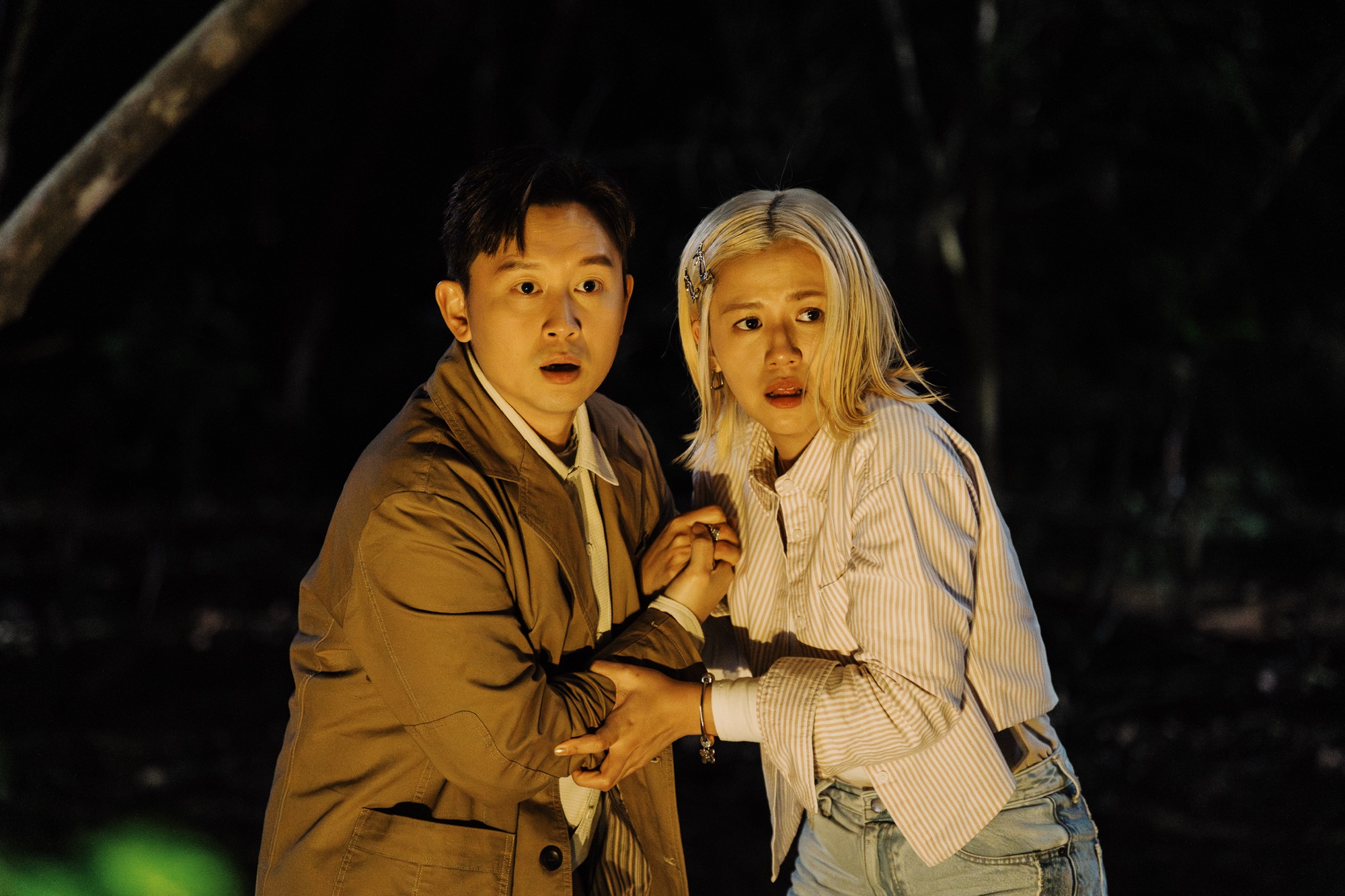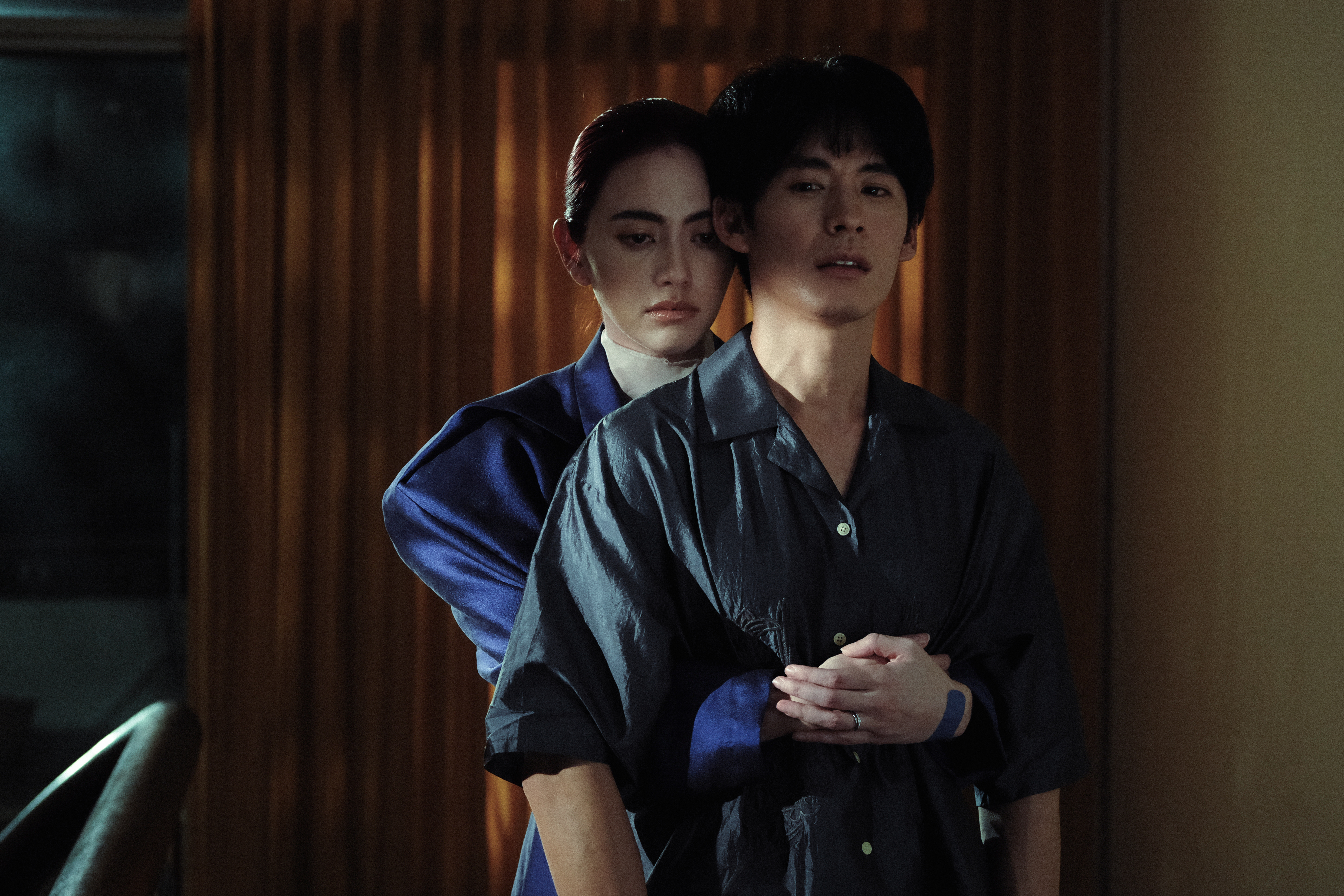
Ratchapoom Boonbunchachoke’s A Useful Ghost begins as a dark comedy and gradually transforms into a sharp political fable. Premiering at Cannes and winning the Grand Prize at Critics’ Week, the film follows Nat (Davika Hoorne), a woman who dies due to childbirth and returns as a haunted vacuum cleaner to protect her husband March (Wisarut Himmarat), the youngest son of a home appliance factory.
To win the affection of her husband’s family, Nat starts exorcising the ghosts that haunt the family’s factory. But when she is asked by a government minister, Dr. Paul (Gandhi Wasuvitchayagit), to banish a ghost from his past, she is forced to confront a deeper moral dilemma.
Beneath a seemingly delightful ghost comedy, A Useful Ghost serves as a bold allegory that reckons with Thailand’s buried traumas—touching on pollution problems, political injustice, class divisions, and conflicts among the lower class people. Through a ghost story, Ratchapoom reveals his ambitious attempt to ignite dialogue around Thailand’s unresolved societal wounds.

On Ghost and Politics
Why do you choose to use a ghost story to reveal the political issue and the massacre that happened 15 years ago?
Boonbunchachoke:
Ghost is a very popular and well known genre in Thai cinema. I think ghosts are a perfect rhetorical figure as a narrative to talk about the past that we refuse to forget. For me, it is a tool to explore the political tensions surrounding many unresolved issues in Thailand like the forces of appearance and the injusticed massacres. Just like a ghost, the past is now trying to haunt the present.
I don’t want to jump into making a political film right away. So we begin with this couple as a starting point, and then expand the exploration of other dimensions in society.
It is also interesting for me to mix high and low tensions, silliness and seriousness in the film, so it is more unpredictable. I like the idea that the audience might not know how to react when the film goes on.
What is your position in this film?
Boonbunchachoke:
One of the things that inspired my film is the demolition of architecture and statues from the 1930s by the People’s Party. I think that is a way for the establishment to silence or delete some pasts in Thailand.
For me, I want to be that character who had sex with the ghost and tried to remember their lives and the things they did. I try to provoke people to think about the past, the unresolved, and to generate discussion about how the living deal with the past when the past refuses to be long gone.

On Characters
How Did You Approach Portraying Queer Characters in Your Film?
Boonbunchachoke:
All the characters in the film came to me quite naturally. When I am writing about the queer couple, I try not to be cliche. Most of the time there are stories about how LGBTQ+ people suffered in society. But I tried to see what other things they could do in the film. It doesn’t need to be a romantic film or a coming out story. They could do politics as well. I just want to put queer characters in some other context that normally people wouldn’t put them.
What about the Thai Chinese Family in the Film?
Boonbunchachoke:
I’m Thai Chinese myself but I am not that rich as the family depicted in the film. But Thai Chinese are quite dominant in Bangkok especially financially. I had experience with my family that they have prejudice against people that don’t speak proper Thai language. And Suman, the mother in law in the film, she is actually not part of the Thai Chinese family so she speaks a dialect called Isa. To fit in this family, she couldn’t speak her own dialect in this family. In a way, she is another ghost because she is also pressured by the family. That also justifies why she is so mean to Nat, because she has been through a lot.

How Do You Bring Out All These Lively Characters Using Colour and Costume?
Boonbunchachoke:
In the film, Suman always wears different colours with the rest of the elderly people in the family, showing that she is always opposed to the rest of the family.
For Nat, the concept is to let people know that she belongs to the past, so she needs to stand out in a weird way. She is always wearing an exaggerated coat with a big padded shoulder like an office lady from the 80s. Because she’s here to work. I also want to portray her as someone who carries lots of burden. Her coat is so big that she moves quite difficult and conscious.

On Thai Cinema
Is This Film Going to be on Both the Local Screen and the International Screen?
Boonbunchachoke:
We haven’t decided on the release yet. We will wait and see what happens in Cannes. But I think the Thai audience would understand the film the most with its context, and its humor that foreigners might not get immediately. But still, this film is not only about comedy, it’s a mix genre film, so I am not sure how the Thai audience will react to this.
I don’t feel very optimistic about it because only been a few local films that really got a hit in Thailand in the past few years. And there’s this general prejudice against Thai films, sometimes Thai people look down on their own films and series. Now, Thai films are struggling to win the audience’s trust.
How About the Queer Cinema Market in Thailand?
Boonbunchachoke:
I think BL (Boys Love) and GL (Girls Love) is very popular in Thailand now. They have a huge fan base on the Internet and it is more normalised and commercialised now. But I’m not sure about the mainstream audience. And it is weird that sometimes fans only like the BL couples themselves but not as much as the actors who came out as gay. You don’t really know the line of people’s acceptance on LGBTQ+ on screen.