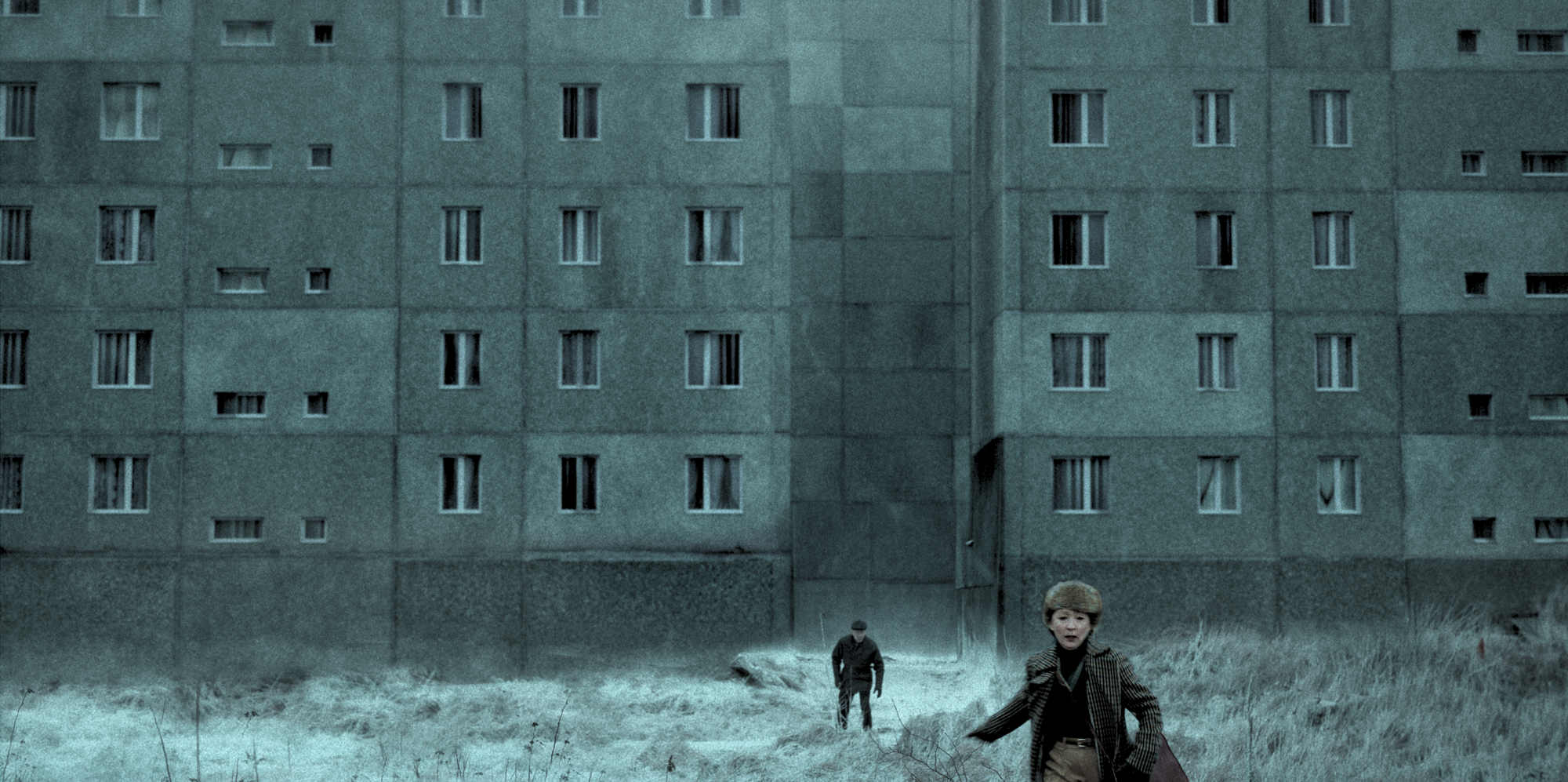
Inspired by a real-life murder involving a Chinese woman studying overseas, New Zealand-based director Cui Mingjian’s short film explores the psychological aftermath of an intimate crime through the friendship between two women living next door to one another, rather than reconstructing the case as a conventional thriller.
Developed through Jane Campion’s “A Wave in the Ocean” programme in New Zealand, the 15-minute film premiered at the 82nd Venice International Film Festival. At the 2026 FIRST International Film Festival in Xining, China, it was named Short Film of the Year in the “First Frame” section, winning from a field of ten nominees. The programme is dedicated to foregrounding women’s experiences and representations on screen.

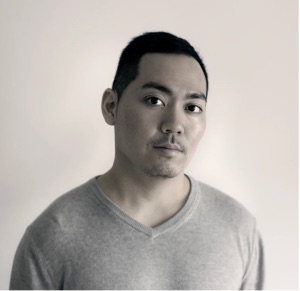
Cui Mingjian at FIRST 2026
In this interview, Cui discusses the true crime that inspired the film, the dreamwork practices introduced by Campion and Kim Gillingham, and the creative possibilities—and limitations—of working within New Zealand’s film culture.
Tilda: The film was inspired by a real case involving a Chinese woman studying overseas who murdered her husband. What kind of research did you undertake?
Mingjian: I first heard the story when I entered university. Some senior students told it to the new students in order to frighten us, and it stayed with me. When I decided to develop it into a film, I began by reading news reports. I had not realised how much public attention the case had attracted at the time.
I changed a great deal when writing the film, but certain elements of the real case resemble its ending. The woman returned to China by plane and was stopped at Shanghai airport. From what I understood, her mental state was extremely confused. A prominent psychiatrist in China later argued that she had a serious mental illness, possibly linked to a family history. What struck me was that the woman seemed to have spent her entire life trying to escape her mother’s fate, only to repeat almost exactly the same act.
I could not include everything in a short film. But that sense of tragedy—the idea that someone struggles desperately against an inherited destiny and still finds herself reproducing it—guided me towards the film’s themes of love and pain.
Tilda: The film therefore contains an interpretation of the murderer’s inner life rather than merely reproducing the facts of the case.
Mingjian: Yes. I tried to imagine the story from her first-person perspective. While writing the voice-over, I sometimes felt that the protagonist, Rui, her neighbour, Lion, and I had merged into one person. I entered a state of deep identification with them.
Of course, I understand the moral reality. A young person lost his life, and nothing can make that fair. I am not trying to avoid moral judgement because I have no moral position. I know where I stand. But what interested me as a filmmaker was the emotional complexity that could not be placed anywhere. I wanted to enter that space without pretending that understanding an emotion is the same as excusing an action.
Tilda: At the beginning, the film suggests that Rui remained in the same room as her husband’s body for several nights. It is deeply disturbing, particularly because she appears so physically slight. The film leaves much of the murder itself unseen.
Mingjian: That physical contrast was present in the real case. The woman was reportedly quite small, while her husband was much taller and physically larger. I was fascinated by the idea that something astonishing could erupt from such a seemingly fragile body. I did not see the crime as a conventional crime of passion. To me, it was a crime of pain.
I also chose not to build the film primarily around the psychiatric explanation. My interpretation was that, at a certain moment, she made a conscious decision: this was her love, and she believed she had to bring it to an end with her own hands. That may sound like a disturbing or even perverse reading. But dramatically, I needed to understand it as a decision rather than as something that could simply be dismissed as madness.
Tilda: What kind of responses did you receive after the film screened in Venice?
Mingjian: Many people responded very strongly to the sound. They found it oppressive, but they also felt immersed in the environment. My production designer, Mark Grenfell, made an interesting observation. He asked why the sound of the cornfield did not continue throughout the entire film. The cornfield had been important to my original conception. I wanted the environment to feel dense, enclosed and almost impossible to breathe in. But we could not find an apartment beside an actual cornfield. So visually, we tried to compensate by making the room feel green, as though the vegetation were gradually spreading into the interior. At the end, it seems to pull the character back inside.
The sound designer, Maxwell Scott, was a New Zealand-based artist who had worked with one of my producers before. Because our budget was very limited, he could only give me one day each week. I would visit his home, and we would work through the material in his living room. I had previously studied sound, so I created much of the Foley myself. Some of the breathing in the film is also mine. I felt that I understood the rhythm of the character’s breathing and knew how it should move.
That session was one of the most emotional moments in the entire process. Before then, the images had always felt incomplete. I could hear the film internally, and sometimes I could approximate it through headphones, but it was not fully present. When all the sounds finally entered the space, I felt the hair rise across my body. The film seemed to transform from two dimensions into three. I entered its world. That was the first moment when I thought, “Now I have my film.”
Tilda: You mentioned that the film was made in New Zealand on a relatively tight budget. How was it financed?
Mingjian: I participated in “A Wave in the Ocean”, and Jane Campion was extraordinarily generous. Netflix had given her funding that she could theoretically have used to make her own feature film. Instead, she devoted it to the programme and distributed the resources among us so that we could make our films. There were ten participants, although two were a couple working together, so the programme ultimately supported nine films.
Jane also came to Venice with us. She was not there simply to display us as her students. She wanted to speak to filmmaker friends such as Guillermo del Toro and say, in effect, “Look at what these young filmmakers have made. You should return home, create a programme and support your own emerging artists.” That is the kind of person she is.
Tilda: How frequently did you work with Jane Campion during the programme?
Mingjian: The first year was structured almost like a film school. We had a complete curriculum covering writing, screenplay development, aesthetics, casting and performance. We also had practical acting workshops. Each month, we would have one-to-one sessions and then spend one or two weeks working through different aspects of the films.
Jane wanted to teach us to create from within ourselves rather than always searching externally for the answer. She disliked excessive film-school terminology. I had studied within a highly industrial film programme, so I had accumulated many technical tools. When I began working with Jane, that training sometimes became an obstacle. She would laugh and tell me to forget the language. She would say, “Do not tell me Act 1, Act 2 and Act 3. Just tell me how the story goes.” That instruction opened something in me. She encouraged us not to remain in our heads, but to descend into something deeper and more intuitive.
At first, I did not understand how intuition could be taught. Jane would say that intuition belonged partly to another realm and that she could not teach it directly. But she also believed that a filmmaker’s intuition could be trained gradually through different practices. The workshop developed along that path. Each month, we went deeper. We watched films, analysed their construction and considered how dreams could contribute to writing and directing.
Tilda: Could you elaborate on how the dreamwork influenced the film?
Mingjian: The programme included a week devoted specifically to dreamwork. Jane took us to a beautiful fishing village on the New Zealand coast, where Kim Gillingham, a teacher specialising in dreamwork, joined us for an intensive week of dream exercises. (Kim has also worked with other filmmakers and performers, including Chloé Zhao and Jessie Buckley.) Some of the other participants received ideas almost immediately. I did not.
There was an exercise based on opening the senses and asking for guidance. I worked extremely hard at it, because I am the kind of person who responds to a task by going all in. Jane often told me, “You work very hard, but you also need to know where and how to work hard.” That was difficult for me to understand. As a Chinese child, when someone teaches me a method, my instinct is to apply myself completely. But this work required another kind of receptiveness. I tried very hard throughout the week and received nothing. I returned to Auckland feeling desperate.
Then, about a week later—after I had given up—the dream came.
The training involved recording dreams every day. At first, this was difficult because the waking mind immediately reorganises the logic of a dream. I learned to record my voice while I was still half asleep, before trying to write anything down. Gradually, the dreams became more vivid and strange.
First, I dreamt of Lion, one of the film’s characters. At that point, I had not cast the role, so the person in the dream took the form of a tall woman who had often looked after me when I was studying in the United States. I went to her home, but within the dream I knew that it was Lion’s home. I had been struggling to write the character’s voice-over, and the dream seemed to release something. When I woke, I felt as though my unconscious had given me permission to write her.
A few days later, I became blocked again, this time while trying to write Rui.
Then I dreamt that I entered her dark apartment. The apartment was somehow located inside a luxurious prison. She invited me into the room and asked me to sleep in the bed she had shared with her husband. When I looked to the side, I saw him. I woke up terrified.
I do not interpret these dreams as a supernatural or religious experience. I think I was using my unconscious to search for material that my conscious mind could not reach. The process helped me abandon certain technical habits and follow an emotional lead. That is one of the most valuable things I learned from Jane: during the exploratory stage, you can remain completely open, disordered and intuitive, as though you are turning over every part of a garden. But once production begins, the preparation must become extremely rigorous.
Tilda: How did you balance that intuitive process with practical preparation?
Mingjian: Jane is highly intuitive, particularly when it comes to performance and what happens spontaneously on set. But her pre-production process is also extremely disciplined. She always draws her own storyboards, because she believes the act of drawing is the first step in translating the screenplay into images. She told us it did not matter whether we could draw. We could use any colours, shapes or marks that helped us discover the image.
I cannot draw conventionally, so I created blocks of colour and abstract visual impressions. Because of my previous training, I could then communicate with my cinematographer, Adam Luxton, in more technical terms. He would sometimes ask why we were designing shots before we knew exactly how the actors would move. I would say, “Let us create a possible structure now. We can throw all of it away when we arrive on set.”
That became our method. The writing and exploration could be very loose, but the production planning was strict because we only had four shooting days.
Tilda: The film centres on the relationship between two women. How did you prepare the actors for that relationship?
Mingjian: It was difficult at first. Conceptually, Yihan (Roxie) Pu’s character, Lion, is extremely close to Rui, performed by Ann An. In the voice-over, Lion reaches a point of understanding Rui so completely that she almost becomes her. But within the earlier scenes of the story, their relationship is not yet that intimate. When Lion invites Rui over to eat dumplings, for example, she is simply a helpful friend. She may even find Rui slightly strange.
Roxie therefore had to perform two emotional layers. Her physical performance belonged to the past, when she was sympathetic but still somewhat distant. Her voice belonged to a later understanding. Roxie was the person who helped me recognise that distinction. She is a highly intuitive performer, although this was her first major role. She told me, “Eventually, I have to become her. I have to reach the place from which the voice can speak.”
Our rehearsals therefore moved away from the screenplay. The two actors performed exercises that seemed unrelated to specific scenes. They would look silently into each other’s eyes. One would stare at the back of the other’s head. They wrote down questions their characters wanted to ask each other and then hid the pieces of paper. Then we tried a particular exercise. We placed a blanket on the floor and treated it as a bed. I asked the Ann An to lie beside her imaginary husband. After she left the room, I brought Roxie in and told her, “This is your husband.” She immediately began to cry. She walked towards the blanket and embraced the imaginary body from behind. She told me that the sadness she felt was not for her own husband. It was for Rui. I said, “That is it.”
Much of our rehearsal process involved silent exercises of that kind. The screenplay removes a great deal of explicit dialogue. The characters often speak only at the surface level, while the voice-over must express the deeper understanding beneath it. Roxie had to complete an emotional arc of approximately 20 years within a short film. It was a considerable task.
Tilda: Did Ann An, the actress playing Rui, require a different approach?
Mingjian: Ann An had a really difficult task—to stay in an extreme emotional state and loneliness for a long period of time. She is quite cerebral, and I can get heady too sometimes, but we found that all the analyzing didn’t work at all. So our main task was to help her relax and find that state of being. Once that happened, she could explore, imagine, and let her curiosity guide her.
We discovered some practical and even humorous approaches. During rehearsal, we needed to explore scenes involving the husband’s body. The film contains no conventional sex scene, but I still hired an intimacy coordinator, who initially read the script and said, “I do not think I need to be there.” I replied, “I may need you because the intimacy is psychological.” There is no explicit sexual contact between the two women or even between Rui and her husband, but the film contains intimacy, death and the physical presence of a body. I also felt that when actors speak directly with a director, they may feel compelled to perform an answer. A third person could create a safer space for experimentation.
During rehearsal, I discovered that Ann An felt uncomfortable touching the male actor’s face. She was a young woman and very shy, which was completely understandable. Then I remembered that she had worked as a makeup artist. I asked, “When you are doing someone’s makeup, how do you touch a man’s face?” She said, “I might check whether there is dust on his nose or look carefully at his eyebrows.” So that became the action. I did not tell her, “Touch your husband.” I said, “As a makeup artist, study his face.” She could immediately do it.
Tilda: How would you describe the opportunities and challenges facing Asian filmmakers in New Zealand?
Mingjian: Asian filmmakers remain a minority. But New Zealand is generally respectful towards women and strongly committed, at least in principle, to equality. It is one of the more progressive countries in that regard. I rarely encounter the idea that a particular person is simply not permitted to tell a story. As long as you are willing to create, you can usually find some way to make the work—even within very limited resources.
At the same time, New Zealand does not have an industry on the scale of Hollywood. That can be a limitation, but it can also be liberating. Because the industry is smaller, filmmakers have been able to retain intuitive and unconventional working methods. There is less pressure to insist that every project must be made according to an American system—or even a particular European model.
New Zealand’s lack of a vast industrial system can prevent some films from reaching a larger international stage. But for someone like me, who had very seriously learned one fixed method, it also created freedom. It reminded me that I could make a film without relying entirely on the system I had been taught. I could reconnect with my body, my imagination and my instincts—and trust that they were also legitimate filmmaking tools.
______

FIRST International Film Festival, a film festival-style service platform in Xining, China, focuses on discovering and promoting young filmmakers and their works.