Now in its sixth edition, “First Frame”, FIRST International Film Festival’s section dedicated to women’s cinema, continues to place female experiences and screen representation at the centre of its programme.
Across four feature films and ten shorts, this year’s selection explored not only how women are seen and understood, but how cinema itself can become a space for rewriting women’s stories with greater complexity, intimacy and formal ambition. From family histories and bodily autonomy to migration and identity, geographical landscapes became emotional terrains where questions of survival took tangible cinematic form.
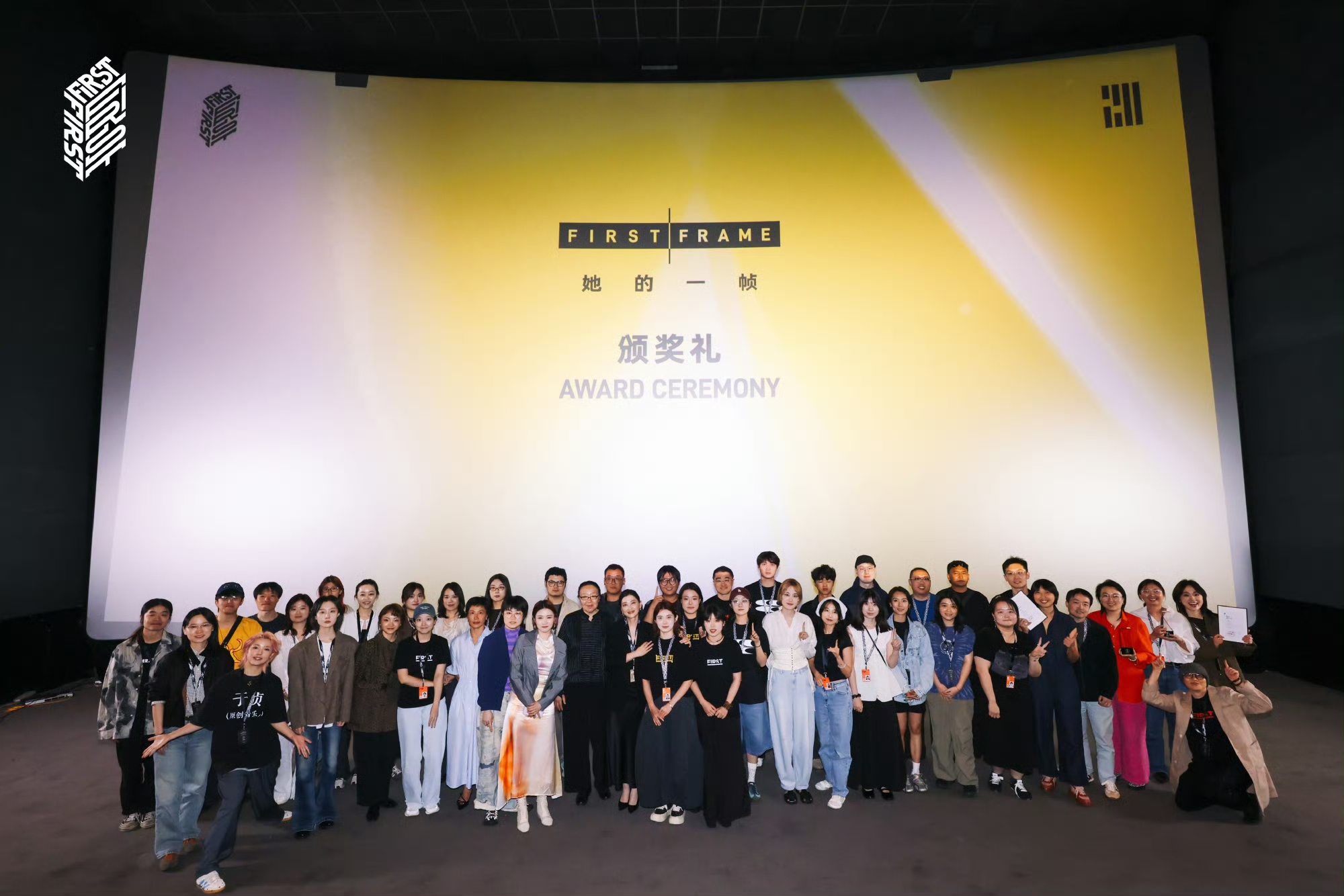
The 2026 jury brought together Malaysian filmmaker and artist Tan Chui Mui, Chinese actress Mei Ting, and Taiwanese cinematographer-director Yu Jing-Ping. On July 23, they awarded Film of the Year to The Confessions of a Mole by TAN Mo, while The Girl Next Door by Cui Mingjian received the Best Short Film award.

Reflecting on the jury’s deliberations, Yu observed that both winning films lingered long after the credits had rolled. “The three of us actually came to the same conclusion: after watching both films, we were all left with a lingering emotional resonance and a great deal to reflect on. That’s one of the reasons we love cinema. Great films don’t necessarily give us answers. Instead, they show us a way of looking at the world—and, through that, a way of understanding ourselves.
Among all competition entries, women directors accounted for 37% of selected filmmakers. In the short-film competition, female directors even outnumbered their male counterparts. “This shift is not only an achievement of FIRST itself,” noted Professor Dai Jinhua of Peking University, a long-time academic collaborator of the festival, “but also reflects broader changes in global cultural production, cultural consumption and creative practice. Women—as artists, filmmakers, audiences and readers—are playing an increasingly influential role in shaping the global cultural landscape, transforming cultural markets and defining emerging trends.”
A Chorus of Women’s Voices
The programme demonstrated the remarkable diversity of contemporary female filmmaking, embracing fiction, documentary, animation and hybrid forms while constantly pushing against conventional narrative boundaries.
In Cherry and Chestnut, director Ma Mengwei constructs a dreamlike journey through the imagination of artist Cherry (Cherrie Yu). Produced during Ma’s residency at the Fine Work Center Fellowship, the short delicately stages a dialogue between contemporary Chinese womanhood and iconic female characters from Chinese cinema. One striking sequence sees Cherry wandering into an installation where these cinematic women appear simultaneously across multiple screens, collapsing history into lived experience.
Elsewhere, Silkworm, a five-minute animation by Japan-trained artist Wei Kejia, transforms the silkworm into an elegant metaphor for the patriarchal structures that continue to shape women’s lives across generations.
The programme also foregrounded women living at multiple social margins. Sayyidah Fatima, directed by Wang Guolan, examines the existential struggles of a Hui Muslim girl, while Daughter of the Apsara follows a Cambodian bride living in Guangzhou as she searches for an identity beyond marriage and motherhood. These films approach marginality not only through gender but also through ethnicity, migration, class and cultural identity, inviting audiences into emotional realities rarely represented on screen.
Writing the Private Self
Perhaps the defining tendency of this year’s programme was the emergence of intensely personal filmmaking that dissolves the boundaries between documentary and fiction. Drawing directly from their own family lives, several filmmakers turned the camera inward, embracing vulnerability as both subject matter and cinematic method.
The most striking example is The Confessions of a Mole, directed by Warsaw-based filmmaker TAN Mo.
Returning to her parents’ home after graduating from film school, TAN finds herself caught between two incompatible futures: pursuing filmmaking or embracing the socially sanctioned path of stable employment and marriage. Daily conflicts with her parents escalate until she is diagnosed with breast cancer, forcing every family member to renegotiate the complicated relationship between love, guilt and obligation.
Rather than allowing the film to sink into despair, TAN introduces stop-motion animation throughout the documentary. Fruits morph into strange organisms, blue threads spread across the dining table before engulfing the family, and a black-headed human figure materialises as an embodiment of cancer itself. These surreal interventions expose both the absurdity and tenderness embedded within family relationships, allowing humour and imagination to coexist with profound emotional pain.
A similarly self-reflexive approach appears in Infanticide, a fifteen-minute debut by Veronica WANG Jingyi. Without formal film-school training, WANG returned home during a holiday and decided to make a film with her divorced parents. “What if it turned out to be a meta-film?” one crew member asks on camera.
Rather than rejecting the suggestion, WANG embraces it. Appearing as herself throughout the film, she gradually transforms the production process into the story itself, blurring the line between lived experience and cinematic construction. The result is a brutally honest portrait of family, memory and self-exposure that resonated strongly with audiences.
Jury member Mei Ting explained why this form of personal cinema affected her so deeply.
“As I was watching, I found myself asking why I’m so deeply drawn to personal cinema. I think part of the reason is that I’m an actor. I’m always interested in exploring the different dimensions and possibilities of performance, and personal films offer a kind of performance in its most raw and organic form. There’s something about that which moves me profoundly.”
A Global Generation of Chinese Women Filmmakers
The competition also reflected the increasingly international trajectories of Chinese women directors. Nearly two-thirds of the twelve female filmmakers selected have studied or worked abroad, attending institutions including the Polish National Film School, Tokyo Zokei University, USC, Columbia University and the University of Cambridge.
Their international experiences have broadened both the aesthetic vocabulary and thematic concerns of contemporary Chinese cinema. Several works had already begun international festival journeys before returning to China. The Confessions of a Mole premiered at IDFA in 2025, while Scorching, Wang Beidi‘s visceral body-horror short, screened earlier this year in the Generation 14plus section of the Berlinale.
Best Short winner The Girl Next Door, directed by New Zealand-based filmmaker Cui Mingjian, also exemplifies this global outlook. Produced as part of “A Wave in the Ocean”, a collective project initiated by Jane Campion in Wellington, the film premiered at the 82nd Venice International Film Festival.
Inspired by the real-life case of a Chinese international student convicted of murdering her husband in the American Midwest, the film avoids sensationalising the crime. Instead, Cui shifts the perspective to the woman living next door, constructing an unsettling psychological portrait that lingers long after the final frame.
For Cui, working abroad has brought both challenges and freedoms.
“Asian filmmakers remain a minority. But New Zealand is generally respectful towards women and strongly committed, at least in principle, to equality…While the country’s relatively small film industry can make international exposure more difficult, for someone like me—who had spent years learning one fixed filmmaking system—it also created a sense of freedom.”
The international experiences of these filmmakers not only introduce diverse artistic perspectives but also help forge stronger connections between Chinese women directors and the global film community.
At a time when filmmaking remains structurally male-dominated, “First Frame” demonstrates that women are no longer merely seeking representation—they are actively reshaping the language, geography and future of Chinese cinema.